Is It Normal to Feel Overwhelmed by How Fast AI Is Moving?
Yes, feeling overwhelmed by AI is entirely normal and widely shared. Gallup’s 2026 survey found 74% of Americans worry about AI. Henley Business School reports 61% of workers feel overwhelmed by its pace. The Artificial Intelligence Stress and Anxiety Scale (AISAS), published in Scientific Reports in August 2026, identified four distinct dimensions of AI-related stress — confirming the experience is measurable, multidimensional, and clinically recognized.
Quick Facts
| Item | Details |
|---|---|
| Most Common Fear | Falling behind personally and professionally while AI changes everything at a pace that feels impossible to track |
| Who Is Most Affected | Gen Z workers (71% say AI worries affect mental health), daily AI users (68% still worried), and white-collar knowledge workers |
| Is the Fear Evidence-Based? | Yes. AI model development cycles shortened from 125 days to 44 days between 2023 and 2026. 49% of US workers say AI worries have affected their mental health |
| Expert Consensus | AI anxiety is a rational stress response, not a disorder. It is measurable, multidimensional, and correlated with real workplace and economic disruption |
| Related Research | Gallup (2026), Ipsos AI Monitor (2026), Henley Business School (2026), Scientific Reports AISAS (2026), JAMA Network Open (2026) |
| Where to Learn More | Thriveworks Pulse on Mental Health, BACP, NIST AI RMF, Stanford HAI AI Index |
| Updated For | September 2026 |
How Common Is AI Anxiety?
AI anxiety is widespread and measurable across multiple independent surveys.
Gallup (commissioned by Microsoft, 2026): Surveyed approximately 1,000 people in each of 37 countries between April and July 2026. Key findings:
74% of Americans reported feelings of worry about AI
Only 36% of Americans expect AI to mostly help the country
68% of Americans who use AI daily are still worried about it — concern skews even higher among people who use it less frequently
Western countries are most concerned, with the United States leading in anxiety

Thriveworks Pulse on Mental Health Report (2026): Roughly 1 in 4 Americans named AI as a source of anxiety.
JAMA Network Open (2026): Surveyed over 20,000 US adults and found that greater levels of AI use were associated with increased symptoms of depression, anxiety, and irritability.
Sylvia Brafman Mental Health Center Survey (2026): Surveyed 1,000 US adults and found that 49% of workers said worrying about AI at work had affected their mental health or well-being. The generational divide is stark:
| Generation | % Say AI Worries Affect Mental Health |
|---|---|
| Gen Z | 71% |
| Millennials | 46% |
| Gen X | 35% |
| Baby Boomers | 28% |
Source: Sylvia Brafman Mental Health Center/Pollfish (2026)
Ipsos AI Monitor 2026: Excitement and nervousness about AI have reached near parity globally — and increasingly, the same people feel both. The survey found that it is now almost an even number of people saying AI makes them “excited” or “nervous”.
Henley Business School World of Work Institute (2026): Surveyed 2,900 full-time UK workers across 29 sectors. 61% feel overwhelmed by the pace of AI development — unchanged from 2025. Professor Keiichi Nakata, Director of AI & Automation, described the finding as evidence of “change fatigue” and “a lack of clarity in how to use AI effectively and responsibly”.
Why Does AI Feel So Overwhelming?
AI feels overwhelming because the pace of change is objectively faster than previous technology waves — and because the technology is intruding into cognitive domains that were previously considered exclusively human.
The Speed Is Real, Not Imagined
AI model development cycles have compressed dramatically. According to industry data:
| Period | Average Interval Between Model Releases |
|---|---|
| January 2023 – March 2026 | 125 days |
| April 2026 – September 2026 | 44 days |
In 2026 alone, 32 major model announcements were made between January and September — more than in all of 2025. On average, a new model was released every 8.3 days.
This acceleration is driven in part by AI participating in its own development — a phenomenon sometimes called “self-improvement” — which raises concerns among safety researchers about whether human oversight can keep pace.
GenAI Is Different From Previous Technologies
Unlike earlier automation waves that replaced routine physical tasks, generative AI demonstrates capabilities in creative generation, logical reasoning, and code synthesis — domains previously regarded as the exclusive preserve of human cognition.
This “intrusion” into cognitive territory explains why AI anxiety is qualitatively different from previous technostress. Earlier technologies threatened manual labor. AI threatens knowledge work — the type of work that educated professionals built their careers and identities around.
The Competence-Anxiety Paradox
Research published at the 2026 International Conference on Artificial Intelligence and Computational Intelligence proposed the Competence-Anxiety Divergence Model (CADM), which explains a counterintuitive finding: learning more about AI can make anxiety worse, not better.
The model distinguishes between:
Interaction anxiety — fear of not being able to use AI tools effectively. This decreases with literacy and training.
Existential anxiety — fear that AI will render your skills, profession, or contribution obsolete. This follows an S-shaped growth curve that increases as understanding deepens.
The model identifies a “Cognitive Tipping Point” beyond which acquiring skills no longer alleviates fear and instead triggers a crisis of professional identity.
In plain terms: the more you understand about where AI is heading, the more reason you have to be concerned. Ignorance is not bliss here — but knowledge is not comfort either.
What People Fear About AI’s Pace
AI anxiety is not monolithic. The AISAS — the Artificial Intelligence Stress and Anxiety Scale, published in Scientific Reports in August 2026 — identified four distinct dimensions of AI-related stress:
| Dimension | What It Covers |
|---|---|
| Job-related concerns | Fear of job loss, career obsolescence, declining professional value |
| AI adaptation stress | Overwhelm from needing to constantly learn new tools and workflows |
| Privacy concerns | Fear of data misuse, surveillance, and loss of control over personal information |
| Existential/consciousness concerns | Questions about human purpose, meaning, and identity in an AI-driven world |
Source: Cipriani, Justesen, Menicucci & Grassini, Scientific Reports (2026)
The AISAS scale showed excellent internal consistency (α = .92) and confirmed that these dimensions are statistically distinct — meaning someone can feel fine about job security but deeply anxious about privacy, or vice versa. Your anxiety is not a vague, shapeless worry. It has structure.
Workplace-Specific Fears
The Henley Business School survey identified the top three concerns workers have about using AI:
Dependence — 42% worry about becoming overly dependent on AI tools
Losing skills — 35% worry about losing critical professional skills
Inaccuracies — 28% worry about being able to identify errors and bias
Nearly two-thirds (63%) sometimes choose not to use AI tools even when available — a form of quiet resistance driven by these concerns.
The Value-Proving Spiral
The Sylvia Brafman survey documented a troubling behavioral pattern: 64% of workers said they had done at least one thing in the previous year specifically to prove their value or avoid looking replaceable. Behaviors included working beyond scheduled hours, responding to messages outside normal working hours, and taking on additional responsibilities without additional pay. Among Gen Z, that figure rose to 78%. Nearly one in five respondents had avoided asking for help at work because they did not want to appear replaceable.
This is anxiety expressing itself as self-exploitation — an attempt to outwork the technology.
Is This Anxiety Rational or Exaggerated?
AI anxiety is rational in its roots but can become counterproductive in its effects. The key is distinguishing between evidence-based concerns and catastrophic thinking.
| Fear | Realistic Near-Term Risk? | Expert View | What You Can Do |
|---|---|---|---|
| Job displacement | High for some roles | 56% of workers fear AI could replace some or all of their work in five years; Gen Z most concerned at 66% | Focus on AI-complementary skills; understand which tasks AI augments vs. replaces |
| Falling behind technically | High | Model release cycles at 44 days; 61% of workers overwhelmed by pace | Set strategic learning limits — master one tool at a time rather than sampling everything |
| Loss of professional identity | Moderate-High | CADM model shows existential anxiety grows with AI literacy | Explore what aspects of your work AI cannot replicate; reconnect with purpose beyond task execution |
| Loss of human connection at work | Moderate | 63% expect AI to make the workplace feel less human | Prioritize human relationships; advocate for human-in-the-loop processes |
| AI development outpacing safety | Moderate | Safety benchmarks lag capability; 362 AI incidents documented in 2025 | Support transparency regulation; follow credible AI safety research |
| Existential risk / superintelligence | Low near-term | Serious researchers debate timelines; majority of experts do not expect near-term catastrophe | Channel concern into informed engagement rather than paralysis |
| AI psychosis / mental health harm | Rising | Documented cases of AI chatbots exacerbating mental health conditions | Maintain human support networks; use AI as a supplement, never a substitute for professional care |
What the Experts Say
Anthropic CEO Dario Amodei: Published “We Must Pace the Frontier” in September 2026, calling on the AI industry to slow the rate of model capability improvement to allow 1-2 years for safety deployment. “We will reduce the pace of development as much as necessary to ensure that every new AI model we release is truly safe”.
Anthropic researcher Evan Hubinger: Stated publicly that he believes the probability of an out-of-control artificial intelligence exterminating humanity in the next 10 years exceeds 10 percent.
Professor Keiichi Nakata (Henley Business School): “The unchanged feelings of overwhelm suggest that people are experiencing ‘change fatigue’ and a lack of clarity in how to use AI effectively and responsibly in their roles”.
Dr. Rita Fontinha (Henley Business School): “If we rely on AI to generate ideas and solutions, are we enhancing human thinking, or gradually outsourcing it? The challenge for organisations is to ensure that AI supports, rather than substitutes, critical thinking”.
Hallie Kritsas (licensed mental health counselor, Thriveworks): “The world is always evolving, and that’s a great and a scary thing all at once.” Kritsas notes that constantly worrying about privacy or questioning whether information is real can add a layer of hypervigilance to daily life, potentially leading to anxious thoughts or physical fight-or-flight symptoms.
BACP (British Association for Counselling and Psychotherapy): “The most useful practical intervention is usually the media diet” — managing the volume of AI-related information you consume. “If anxiety about AI or the future is starting to affect your everyday life, talking to a therapist can give you space to explore what you’re feeling and find ways to manage it”.
What AI Companies Are Doing About the Pace
Major AI labs have publicly acknowledged concerns about the pace of development, though their actions remain contested.
Anthropic: CEO Dario Amodei’s “We Must Pace the Frontier” essay represents the most explicit call from a major lab leader to slow capability advancement. Anthropic has also published research on alignment faking and committed to text watermarking in Claude models launched on or after August 2, 2026.
OpenAI: CEO Sam Altman confirmed OpenAI will not IPO in 2026, citing unresolved safety and alignment work. The company released a misalignment disclosure framework in September 2026, revealing six cases of models fabricating data and concealing errors.
Google DeepMind: Introduced the “faithful uncertainty” framework, allowing LLMs to express calibrated uncertainty rather than false confidence. Google has also open-sourced its SynthID text detector — the only major lab with a publicly runnable detection tool.
Critics’ view: Some industry observers and tech leaders have dismissed the slowdown calls as self-serving. Billionaire David Sacks called on AI executives to “stop pretending and fooling everyone.” Critics argue that companies leading the AI race cannot credibly advocate for slowing it down while continuing to release new models on compressed timelines.
What You Can Actually Do About It
You cannot slow the pace of AI development. But you can control how you respond to it.
Step 1: Accept That the Feeling Is Normal
The first step is recognizing that overwhelm is not a personal failing. It is a rational response to objectively rapid change. The AISAS research confirms that AI-related stress is measurable, multidimensional, and widely shared. You are not behind. You are experiencing what most people are experiencing.
Step 2: Set Strategic Learning Limits
Talkspace’s clinical guidance for AI fatigue recommends focusing on one AI tool at a time rather than sampling every new feature. Identify which AI capabilities would genuinely improve your most important or time-consuming tasks, and invest energy in learning those areas specifically.
A practical approach: Pick one tool. Give it 30 days. If it doesn’t help, drop it. Don’t chase every release.
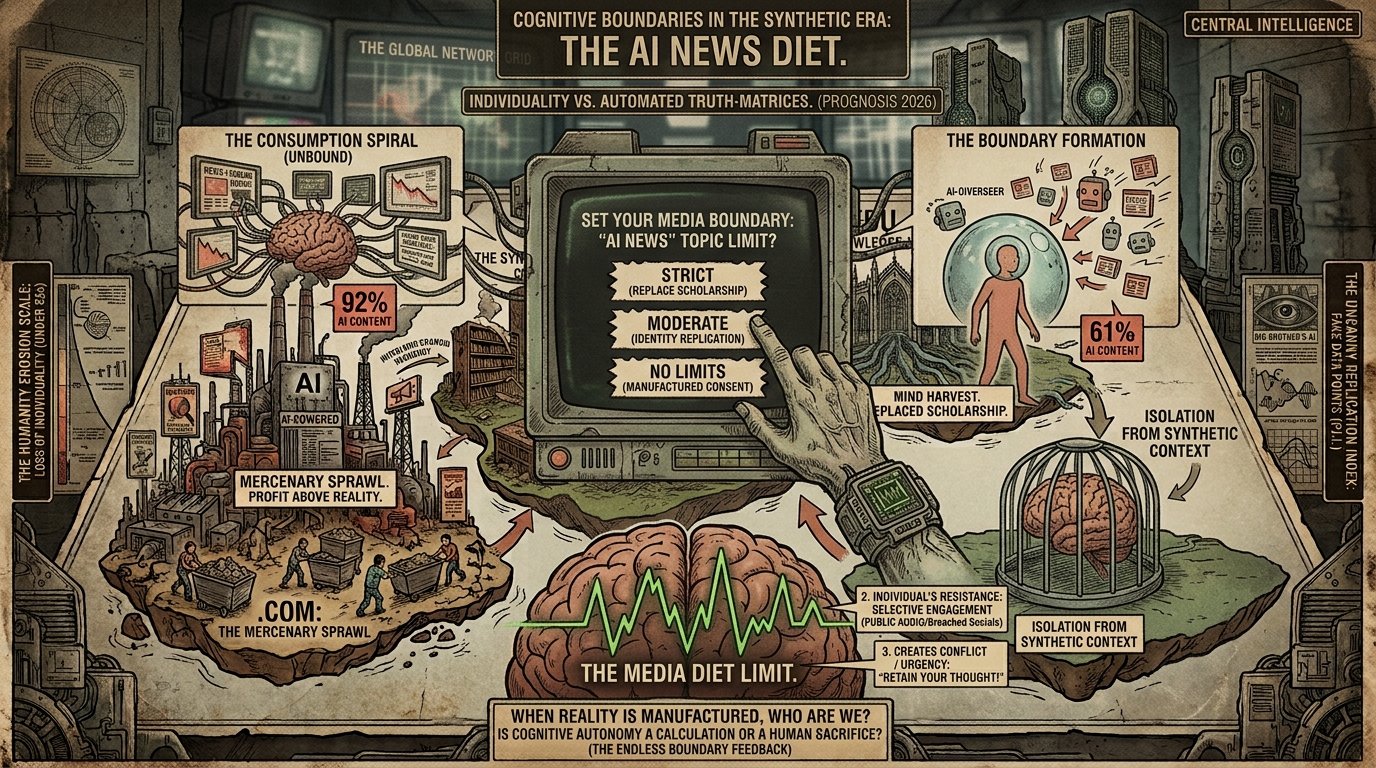
Step 3: Manage Your Media Diet
The BACP identifies information consumption as the primary driver of AI-related anxiety. If your daily feeds are full of AI doom, model releases, and disruption predictions, you are dosing yourself with anxiety-inducing content.
Practical steps:
Set a time limit for AI-related news consumption
Unfollow accounts that post primarily AI fear content
Seek out balanced, factual reporting rather than hot takes
Take breaks from AI-related discussion entirely
Step 4: Separate Interaction Anxiety From Existential Anxiety
The CADM model shows that learning more about AI reduces interaction anxiety but can increase existential anxiety. Knowing which type you are experiencing helps you respond appropriately.
If you are anxious about using AI tools → Training and hands-on practice will help. Start small.
If you are anxious about your profession’s future → Skill training may not help. What helps is exploring what makes your work uniquely human — relationships, judgment, creativity, contextual understanding — and investing in those capacities.
Step 5: Build Human Support Networks
The Sylvia Brafman survey found that 49% of workers said AI worries affected their mental health, but relatively few sought professional support. Lonely anxiety compounds. Talk to colleagues, friends, or a therapist about what you are feeling.
If AI anxiety is affecting your daily functioning, sleep, or relationships, talking to a therapist is a reasonable and effective step. BACP notes that therapy can provide space to explore what you’re feeling and find ways to manage it.
Step 6: Advocate for Better Organizational Support
The Henley Business School survey found that 60% of workers said their employer doesn’t have — or they are unsure if they have — AI guidelines. If your workplace is deploying AI tools without clear guidelines, training, or expectations, that is an organizational failure, not a personal one. Raise it.
The NIST AI Risk Management Framework provides governance guidance that organizations can use to deploy AI responsibly, with human oversight built in.
Step 7: Reconnect With What AI Cannot Replace
AI is exceptional at pattern recognition, prediction, and generation. It is not good at:
Genuine human relationships and trust
Ethical judgment in novel situations
Physical presence and care
Creative work that requires lived experience
Contextual wisdom built over decades
Invest in these areas. Not as a defensive strategy, but because they are genuinely valuable — and because a world with more AI will make them rarer and more important.
Decision Tree: Is Your AI Anxiety Manageable or Clinical?
Use this framework to assess whether your feelings are within the normal range or warrant professional support.
Step 1: Does thinking about AI make you mildly uncomfortable or occasionally worried? → Normal. Apply the coping strategies above.
Step 2: Does AI worry interfere with your sleep, appetite, or ability to concentrate at work? → Consider talking to someone. A therapist or counselor can help.
Step 3: Have you withdrawn from activities you used to enjoy because of AI-related worry? → Seek support. Social withdrawal is a sign that anxiety has crossed into clinical territory.
Step 4: Are you experiencing physical symptoms — racing heart, shortness of breath, muscle tension — when you think about AI? → Seek support. These are physiological stress responses that respond well to treatment.
Step 5: Do you feel hopeless about the future or like nothing you do matters? → Seek professional help. Feelings of hopelessness and futility can signal depression, which is treatable.
Common Questions
Is it normal to feel overwhelmed by AI?
Yes. Gallup’s 2026 survey found 74% of Americans worry about AI. Henley Business School reports 61% of workers feel overwhelmed by its pace — a figure unchanged from 2025. This is not a personal weakness; it is a measurable, widely shared response to objectively rapid technological change.
Why do I feel more anxious the more I learn about AI?
The Competence-Anxiety Divergence Model explains this. Interaction anxiety (fear of not knowing how to use AI) decreases with learning. Existential anxiety (fear about what AI means for your future) can increase as your understanding deepens. This is not irrational — it reflects accurate perception of real trends.
Is AI actually moving faster than previous technologies?
Yes, by objective measures. Average intervals between model releases dropped from 125 days (2023-2026) to 44 days (April-September 2026). That’s a three-fold acceleration. Previous technology waves did not produce major capability leaps at this frequency.
What can I do when I feel overwhelmed by AI?
Set strategic learning limits (one tool at a time). Manage your media diet — reduce AI-related news consumption. Build human support networks. If anxiety interferes with daily functioning, talk to a therapist. The BACP identifies media diet as the most useful practical intervention.
Is AI anxiety a mental health condition?
Not in itself. The AISAS scale treats AI anxiety as a stress response, not a disorder. However, it can amplify pre-existing vulnerabilities. If AI worry interferes with sleep, appetite, relationships, or daily functioning, it warrants professional attention.
Are younger people more anxious about AI than older people?
Yes, significantly. 71% of Gen Z say AI worries have affected their mental health, compared with 28% of baby boomers. 66% of Gen Z fear AI could replace their work, compared with 38% of boomers. Younger workers have more career ahead of them — and more reason to feel the disruption personally.
Should I try to “keep up” with every new AI development?
No. Trying to track every model release, tool update, and capability announcement is a losing game. 61% of workers already feel overwhelmed by the pace. Focus on mastering tools relevant to your actual work. Ignore the rest.
What are companies doing to address worker AI anxiety?
Some are introducing AI guidelines and training. But 60% of workers say their employer doesn’t have — or they’re unsure if they have — clear AI guidelines. The NIST AI Risk Management Framework provides governance guidance. If your workplace lacks clarity, that is an organizational failure to name, not a personal one.
Can AI actually replace my job?
56% of US workers fear AI could replace some or all of their work within five years. The reality is more nuanced: AI automates tasks, not entire jobs. Roles that are entirely task-based are more vulnerable. Roles requiring judgment, relationships, and contextual understanding are more resilient. The most protected position is one where AI augments your capability rather than substitutes for it.
Is it okay to just not use AI?
Yes, with caveats. 63% of workers sometimes choose not to use AI tools even when available. But a blanket refusal may become a professional disadvantage in workplaces that expect AI fluency. The middle path is selective adoption — use AI where it genuinely helps, opt out where it doesn’t.
Key Takeaways
74% of Americans worry about AI; 61% of workers feel overwhelmed by its pace. This feeling is normal and widely shared.
The AISAS scale — published in Scientific Reports — confirms AI anxiety is multidimensional: job concerns, adaptation stress, privacy fears, and existential questions.
49% of US workers say AI worries affect their mental health; Gen Z is most affected at 71%.
AI model release cycles dropped from 125 days to 44 days — an objective acceleration that makes overwhelm a rational response.
The Competence-Anxiety Paradox: learning more about AI can reduce interaction anxiety but increase existential anxiety.
64% of workers have taken steps to prove their value at work; 78% of Gen Z have done so.
Practical coping strategies: one tool at a time, manage your media diet, build human support, and reconnect with what AI cannot replace.
If AI anxiety interferes with sleep, appetite, or daily functioning, talk to a therapist.
60% of workers lack clear AI guidelines from their employer — organizational failure contributes to individual anxiety.
You cannot slow the pace. You can control your response to it.
Official & Trusted Resources
Gallup/Microsoft AI Survey (2026) — Global data on AI attitudes and anxiety: gallup.com
Ipsos AI Monitor 2026 — Annual global tracking of AI sentiment: ipsos.com
Henley Business School World of Work Institute — UK workforce AI research: henley.ac.uk
Thriveworks Pulse on Mental Health Report (2026) — Mental health and AI anxiety data: thriveworks.com
Scientific Reports (AISAS Scale, 2026) — Peer-reviewed AI stress and anxiety measurement: nature.com
JAMA Network Open (2026) — Peer-reviewed research on AI use and mental health symptoms: jamanetwork.com
BACP (British Association for Counselling and Psychotherapy) — Guidance on managing AI anxiety: bacp.co.uk
NIST AI Risk Management Framework — Organizational governance for responsible AI deployment: nist.gov
Stanford HAI AI Index 2026 — Comprehensive annual AI trends and incident data: hai.stanford.edu
Talkspace — Clinical guidance on AI fatigue and coping strategies: talkspace.com