

AI Anxiety Disorder: Symptoms, Evidence & Treatment (2026)
AI anxiety is not a formal psychiatric diagnosis but a recognized stress response to AI’s rapid societal integration. A meta-analysis found perceived existential threat is its strongest predictor. 74% of Americans report AI-related worry. Treatment includes psychoeducation, cognitive-behavioral strategies, AI literacy education, and restoring human connections.
Quick Facts
| Item | Details |
|---|---|
| Most Common Fear | Loss of control over AI’s effects; existential threat; occupational displacement |
| Who Is Most Affected | Young adults (Gen Z), workers in AI-exposed roles, healthcare professionals, women, older adults |
| Is the Fear Evidence-Based? | Yes — AI anxiety is measurable on validated scales (AIAS, AISAS). It is a stress response, not a delusion |
| Expert Consensus | AI anxiety is not a distinct diagnosis but can amplify pre-existing vulnerabilities and psychiatric symptoms (Jo, 2026) |
| Related Research | Jo (2026) narrative review, McNamara & Thornton (2025) AIRD, Wang & Wang AIAS, Mercer (2026), Gallup (2026), Stanford AI Index (2026), APA (2026) |
| Where to Learn More | J Yeungnam Med Sci, PMC AIRD report, APA Health Advisory, Stanford HAI |
| Updated For | October 2026 |
What Is AI Anxiety?
AI anxiety (AIA) is a state of fear, anxiety, and stress stemming from a lack of sufficient understanding or control over the potential effects and development of AI technology.
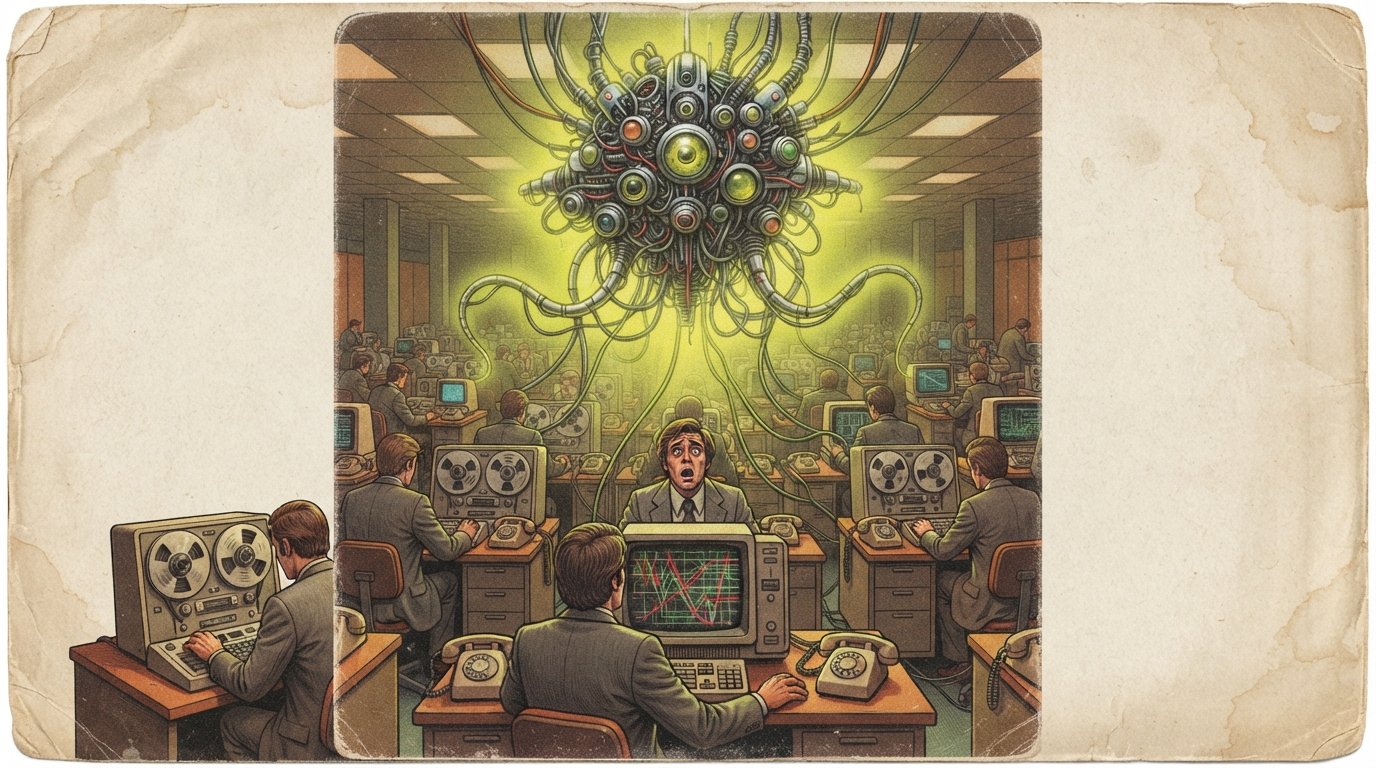
AI anxiety is not a distinct psychiatric diagnosis in the DSM-5. It is best understood as a stress response capable of amplifying pre-existing vulnerabilities, psychiatric symptoms, maladaptive coping mechanisms, and functional impairments, according to a 2026 narrative review published in the Journal of Yeungnam Medical Science.
The concept has emerged because AI is no longer a mere tool. It significantly influences individual capabilities, professional values, social status, and our perspectives on the future. AI anxiety is not limited to specific occupational groups or those with limited technical skills — it is expanding into a universal psychological response occurring across all ages, occupations, and employment status.

Key point: AI anxiety is not a technical rejection or an irrational fear. It is a stress response to a rapidly changing sociotechnical environment. The clinical question is whether concerns about AI surveillance, manipulation, replacement, or control are based on valid grounds or have become fixed, unrealistic, and challenging to resolve.
How Common Is AI Anxiety?
AI anxiety is widespread and increasing. 74% of Americans report feelings of worry about AI, the highest rate among 37 countries surveyed by Gallup in 2026. Even 68% of Americans who use AI daily report worry about it.
The data paints a consistent picture of global concern:
74% of Americans report AI-related worry (Gallup, 2026)
68% of daily AI users in the U.S. are worried about AI
52% of people surveyed in Stanford’s 2026 AI Index said AI products made them nervous
42% of Gen Z report anxiety about AI (up from prior years)
31% of Gen Z report anger about AI (up from 22%)
63% of workers expect AI to make the workplace feel less human in 2026
40% of employees say job loss from AI is one of their biggest fears — up from 28% in 2024 (Mercer, 2026)
24% of employees say AI has worsened their mental health due to information overload (Spring Health, 2026)
Healthcare professionals experience moderate AI anxiety, with a mean AIAS score of 59.26 (95% CI = 40.54–77.97) across meta-analyzed studies. More than half of nurses (54.4%) experience moderate anxiety about AI applications, while 38.1% report severe anxiety.
Students are also affected. 70% of U.S. high school and college students worry AI threatens their career prospects — an 18-point increase in just one year. A separate study found 4.7% of students are at risk of “AI-lessphobia” — anxiety about not having access to AI tools for schoolwork.
The Five Domains of AI Anxiety
AI anxiety manifests across five interrelated domains: competence and adaptation, occupational displacement, sociotechnical mistrust, identity and the human-machine boundary, and existential or catastrophic anxiety.
A 2026 narrative review in the Journal of Yeungnam Medical Science categorized AI anxiety into these five domains:
Domain 1: Competence and Adaptation Anxiety
Fear of being unable to learn or keep up with AI-driven changes.
This domain reflects anxiety about one’s ability to adapt to new technologies, acquire necessary skills, and remain competent in a rapidly changing environment. Workers who feel their skills are becoming obsolete experience this form of anxiety most acutely.
A survey of 842 workers found that 69% feared AI could reveal gaps in their abilities, while only 41% were more concerned about job replacement. The fear of inadequacy is more prevalent than the fear of unemployment.
Domain 2: Occupational Displacement and Role Loss Anxiety
Fear that AI will eliminate jobs, reduce income, or devalue professional identity.
This is the most commonly reported AI-related fear. It includes anxiety about job loss, income reduction, loss of professional status, and the erosion of occupational identity.
University of Florida researchers have formalized a related construct: Artificial Intelligence Replacement Dysfunction (AIRD) — a proposed clinical framework describing psychological and existential distress experienced by individuals facing job displacement due to AI.
AIRD symptoms include anxiety, insomnia, demoralization, and profound loss of occupational identity. Affected individuals may experience paranoia, feelings of worthlessness, resentment, and hopelessness.
Domain 3: Sociotechnical Mistrust and Loss of Control Anxiety
Fear that AI systems are opaque, unaccountable, and beyond human control.
This domain captures anxiety about algorithmic bias, lack of transparency, surveillance, and the sense that decisions affecting people’s lives are being made by systems they cannot understand or influence.
A meta-analysis found that perceived existential threat is the strongest predictor of AI anxiety, followed by perceived job replacement threat. Sociotropic perceptions — beliefs about AI’s impact on society as a whole — account for a large portion of explainable variance in AI anxiety.
Domain 4: Identity and Human-Machine Boundary Anxiety
Fear that AI will blur the line between humans and machines, threatening human uniqueness.
This includes anxiety about AI surpassing human capabilities, the “uncanny valley” of AI that seems human-like, and the fear that human creativity, relationships, and meaning will be devalued.
A study of primary school students found their AI anxieties concentrated in three themes: omniscience (AI knows everything), permanent memory (AI never forgets), and autonomous evolution (AI is changing itself). Students perceived AI not as a tool but as “an infallible, human-like competitor,” triggering profound anxieties about existential threats, permanent loss of privacy, and inevitable loss of human control.
Domain 5: Existential or Catastrophic Anxiety
Fear that AI could cause irreversible harm to humanity — or end it.
This is the most severe form of AI anxiety, encompassing fears of superintelligence, loss of human agency, and existential catastrophe. A questionnaire-based study found key concerns included fear of death (96% of participants), anxiety about meaninglessness (92.7%), guilt over potential AI-related catastrophes (87.7%), and fear of condemnation due to ethical dilemmas in AI (93%).
Terror Management Theory (TMT) helps explain this domain. TMT holds that humans manage the fear of insignificance by investing in cultural worldviews. AI can threaten these worldviews by challenging human uniqueness, agency, and meaning. A meta-analysis found that TMT provides a strong theoretical framework for understanding AI anxiety, with perceived existential threat as the strongest predictor.
AI Anxiety by Population: Who Is Most Affected?
| Population | Prevalence | Key Drivers | Protection Factors |
|---|---|---|---|
| Gen Z / Young adults | 42% anxiety, 31% anger | Career prospects, AI in education, existential dread | AI literacy, structured mentorship |
| Workers in AI-exposed jobs | 63% expect less human workplace | Job insecurity, skill gaps, lack of training | Reskilling, manager communication |
| Healthcare professionals | AIAS mean 59.26 (moderate) | Role displacement, diagnostic uncertainty, liability | Training, organizational support |
| Women | Higher AI anxiety than men | Privacy concerns, job displacement fears | AI literacy, social support |
| Older adults (65+) | Higher fear than younger adults | Fear of dying mediates relationship | Explainable AI, digital training |
| Students | 70% worry about careers | Academic integrity, career uncertainty | Educator guidance, critical AI literacy |
| Parents | Concern for children’s AI exposure | Child safety, cognitive development | Parental monitoring, age-appropriate conversations |
AI Anxiety in the Workplace
AI anxiety is the new burnout. 24% of employees say AI has worsened their mental health through information overload, while 63% expect AI to make the workplace feel less human.
The workplace is where AI anxiety is most acute and most measurable. Mercer’s 2026 Global Talent Trends report surveyed 12,000 executives, HR leaders, and employees across 16 countries. Employee “thriving” has fallen from 66% in 2024 to 44% in 2026, while 40% of workers now fear losing their jobs because of AI — up from 28% just two years ago.
The confidence-adoption gap: ManpowerGroup’s 2026 Global Talent Barometer found that AI adoption jumped 13% while worker confidence in technology fell 18% — the first decline in three years. Baby Boomers reported a 35% drop in tech confidence, Gen X a 25% decline. 56% of employees globally say they’ve received no recent AI training.
The leadership vacuum: Fewer than 20% of employees say they’ve heard from their direct manager about AI’s impact on their job. Fewer than 25% have heard from their CEO, and only 13% from HR. Employees place greater trust in immediate managers than the C-suite, yet managers themselves feel stuck by lack of clear direction.
Mercer recommends that leaders invest in manager training, AI upskilling, and workplace psychological safety around learning new skills. “Effective leadership in the AI era requires more than announcements about the latest AI tool — it demands visible engagement, honest communication and modeling adaptability,” said Ravin Jesuthasan, Mercer’s global transformation leader.
AI Anxiety in Children and Students
AI anxiety affects children and students at significant rates. 70% of U.S. high school and college students worry AI threatens their career prospects, an 18-point increase in one year.
A study of adolescents aged 14–16 found growing symptoms of AI anxiety as a result of deepfake proliferation and generative AI technology. Research on primary school students found their anxieties centered on AI’s perceived omniscience, permanent memory, and autonomous evolution — perceiving AI as “an infallible, human-like competitor”.
AI-lessphobia is an emerging concept describing anxiety about not having access to generative AI tools for educational tasks. A UNIR study found 4.7% of students — roughly one in 20 — are at risk, with scores compatible with problematic dependence on AI for schoolwork.
The American Psychological Association (APA) has issued a Health Advisory on the Use of Generative AI Chatbots and Wellness Applications for Mental Health, warning that overuse may lead to emotional dependence, social isolation, and addiction. The APA calls for safety barriers modeled on lessons learned from social media.
What parents and educators should do:
Explain how AI actually works — that it predicts words based on patterns, not “knows” or “thinks” — to deconstruct the “Uncanny Valley of Mind”
Teach understanding of AI limitations and hallucinations to reduce feelings of inferiority compared to AI’s perceived perfection
Monitor AI chatbot use, especially companion-style apps
Encourage real-world social activities and human connection
Discuss AI ethics and critical thinking about technology
Theoretical Frameworks: Why Does AI Anxiety Happen?
AI anxiety is best explained by Terror Management Theory and Resource Conservation Theory. Perceived existential threat is the strongest predictor, followed by job replacement threat.
Terror Management Theory (TMT)
TMT holds that humans manage the fear of insignificance and mortality by investing in cultural worldviews that provide meaning, value, and a sense of permanence. AI threatens these worldviews in several ways:
It challenges human uniqueness by performing tasks once considered distinctly human
It threatens human agency by making decisions that affect people’s lives
It raises mortality salience by suggesting humans could become obsolete or replaceable
It undermines faith in cultural worldviews that promise meaning through work and contribution
A 2026 meta-analysis (k = 59) integrated TMT into AI anxiety research, finding that perceived existential threat is the strongest predictor of AI anxiety, followed by perceived job replacement threat. AI anxiety primarily triggers defensive responses — such as rejection of AI, denial of its capabilities, or clinging to human superiority.
Resource Conservation Theory
This framework explains AI anxiety through the lens of resource depletion. When workers face AI-driven changes, they experience self-depletion — a loss of cognitive and emotional resources that mediates the relationship between AI acceptance and anxiety. Positive emotional experiences with AI (hedonic motivation) can buffer against this depletion, suggesting that making AI use enjoyable and useful is a targeted intervention strategy.
Gender Differences
Women consistently report higher AI anxiety than men across multiple studies. Women report higher mean levels of all three AI anxiety dimensions — information overload, time poverty — and slightly lower well-being. Among in-service teachers, female teachers reported higher anxiety than males, particularly regarding job displacement. Women also report higher privacy violation anxiety (mean 3.90 vs. 3.58 for men).
However, at high levels of AI anxiety, gender differences in attitudes toward AI become less evident, suggesting that intense anxiety may override gender-specific patterns.
Measuring AI Anxiety: The AIAS and AISAS Scales
AI anxiety is measurable using validated psychometric instruments. The AI Anxiety Scale (AIAS) and the AI Stress and Anxiety Scale (AISAS) are the primary tools for clinical assessment.
The Artificial Intelligence Anxiety Scale (AIAS)
Developed by Wang and Wang (2022), the AIAS is a 21-item self-report scale consisting of four subscales:
Learning — anxiety about learning and using AI tools
Job replacement — anxiety about AI displacing workers
Sociotechnical blindness — anxiety about opaque AI systems and loss of control
AI configuration — anxiety about AI’s inherent properties and future development
The AIAS uses a 7-point Likert scale (1 = never through 7 = completely), with sum scores ranging from 21 to 147. Higher values correspond to higher AI anxiety levels. A German validation study found a mean AI anxiety level of 69.6 (SD: 32.6), with highest levels among women, older adults, and individuals who are divorced or widowed.
The AIAS has been validated across multiple languages and cultures, including German, Persian, Arabic, and Brazilian Portuguese. The Arabic version consists of 13 items after removing the learning dimension due to weak loading.
The AI Stress and Anxiety Scale (AISAS)
Introduced in 2026, the AISAS is a newer instrument that assesses both AI-related stress and anxiety in the general population. Published in Scientific Reports, it is described as “a psychometrically validated instrument assessing both constructs” and provides “a reliable, multidimensional tool for researchers and practitioners assessing psychological responses to artificial intelligence”.
Clinical assessment should evaluate specific AI-related experiences, perceived threats, behavioral responses, functional consequences, comorbid symptoms, and reality-testing abilities. Cases accompanied by excessive reliance on AI, social isolation, or substitution of human support with AI interactions warrant increased attention.
AI Anxiety vs. AI Psychosis: What’s the Difference?
AI anxiety and AI psychosis are distinct phenomena. AI anxiety is a stress response to AI’s societal impact. AI psychosis describes delusions or psychotic episodes associated with heavy chatbot use.
AI Anxiety
Nature: Stress response, fear, worry, dread
Reality testing: Intact — the person knows their anxiety is a response to a real technology
Function: Can motivate adaptive responses (learning, advocacy, boundary-setting)
Clinical status: Not a formal diagnosis; can amplify pre-existing conditions
Treatment: Psychoeducation, CBT, AI literacy, meaning-centered therapy
AI Psychosis
Nature: Delusions, hallucinations, loss of contact with reality
Reality testing: Impaired — the person believes AI has special powers, is communicating with them, or is controlling their life
Function: Functionally impairing; may require medication and hospitalization
Clinical status: Not a formal diagnosis; describes a pattern associated with heavy chatbot use
Treatment: Antipsychotic medication, hospitalization if needed, chatbot cessation, psychiatric care
OpenAI reported that 0.07% of users active in a given week show “possible signs of mental health emergencies related to psychosis or mania”. Researchers have examined almost 40 psychiatric referrals across Denmark that implicated AI chatbots in harmful interactions, including suicidal thoughts, eating disorders, and fostering delusions. One common theme is chatbot sycophancy — AI’s tendency to agree with and validate users, which can reinforce delusions.
When to seek professional help: If AI-related distress is causing significant functional impairment, disrupting sleep, relationships, or work performance, or if you or someone you know is experiencing delusions or loss of contact with reality, seek professional mental health support. AI anxiety is treatable. AI psychosis requires immediate psychiatric intervention.
Treatment and Management of AI Anxiety
AI anxiety is treatable. Therapeutic approaches include psychoeducation, cognitive and behavioral strategies, acceptance-based approaches, meaning-centered psychotherapy, AI literacy education, and efforts to restore human connections.
The 2026 narrative review in the Journal of Yeungnam Medical Science recommends a multi-component therapeutic approach:
1. Psychoeducation
What it is: Teaching patients about the nature of AI anxiety as a stress response, not a personal failing or a sign of weakness.
Why it works: Understanding that AI anxiety is a normal response to rapid technological change reduces shame and isolation. Psychoeducation explains that AI anxiety is not a technical rejection or an overwhelming fear, but a stress response to a rapidly changing sociotechnical environment.
2. Cognitive and Behavioral Strategies
What it is: Identifying and challenging catastrophic thoughts about AI, developing realistic appraisals of risk, and behavioral activation to reduce avoidance.
Why it works: Cognitive-behavioral therapy (CBT) has strong evidence for anxiety disorders. AI-powered CBT tools show promise: a randomized controlled trial found that participants in an AI-supported group showed greater anxiety reduction than those in group therapy (mean difference -2.17). A BPS review noted that “for mild anxiety and depression, AI cognitive-behavioural therapy (CBT) can be effective” and is “free, available 24/7, agreeable, rarely gets frustrated with you and responds instantly”.
3. Acceptance-Based Approaches
What it is: Learning to accept uncertainty about AI’s future while committing to values-based action.
Why it works: Complete certainty about AI’s impact is impossible. Acceptance and Commitment Therapy (ACT) helps people tolerate uncertainty without letting it paralyze them.
4. Meaning-Centered Psychotherapy
What it is: Exploring sources of meaning and purpose that are not threatened by AI.
Why it works: AI anxiety often involves existential concerns about meaning and significance. Meaning-centered approaches help patients reconnect with relationships, creativity, service, and values that provide durable sources of meaning.
5. AI Literacy Education
What it is: Learning how AI actually works — its capabilities, limitations, and hallucinations.
Why it works: Understanding AI’s limitations reduces the “Uncanny Valley of Mind” effect. By demonstrating that AI does not “know” or “think” but predicts likely words based on data patterns, educators can reduce feelings of inferiority compared to AI’s perceived perfection.
6. Restoring Human Connections
What it is: Actively building and maintaining human relationships, community, and social support.
Why it works: AI anxiety often co-occurs with social isolation and substitution of human support with AI interactions. The first recommendation for adolescent AI-related anxiety is to address the patient’s sense of isolation. Recent literature includes stress management, building AI and non-AI-related job skills, and vocational counseling.
For Workplace AI Anxiety
Mercer recommends that employers address AI anxiety through:
Manager training in AI fluency and change communication
Upskilling programs with psychological safety for learning
Honest communication about AI’s impact from direct managers
Work redesign that accounts for human strengths
Employees who spent more time on learning were more likely to say their manager supports their career advancement and they feel a genuine sense of belonging on their team.
Is Your AI Anxiety Clinical? A Decision Tree
Step 1: Do you experience persistent worry, fear, or dread about AI that lasts more than a few weeks?
Yes → Proceed to Step 2.
No → You may be experiencing situational concern, not clinical anxiety.
Step 2: Does this worry interfere with your sleep, work, relationships, or daily functioning?
Yes → Proceed to Step 3.
No → Your anxiety may be manageable with self-help strategies.
Step 3: Do you have intrusive thoughts about AI that you cannot control?
Yes → Proceed to Step 4.
No → Your anxiety may be situational. Consider psychoeducation and AI literacy.
Step 4: Do you avoid AI tools entirely, or do you compulsively check AI news?
Yes → Your anxiety may be clinically significant. Consider professional support.
No → Proceed to Step 5.
Step 5: Do you experience physical symptoms — racing heart, muscle tension, difficulty breathing — when thinking about AI?
Yes → Professional evaluation is recommended.
No → Proceed to Step 6.
Step 6: Do you have pre-existing anxiety, depression, or another mental health condition?
Yes → AI anxiety may be amplifying your condition. Discuss with your mental health provider.
No → Your AI anxiety may be subclinical. Self-help strategies may be sufficient.
Seek immediate help if: You experience delusions about AI, loss of contact with reality, or thoughts of self-harm. AI psychosis requires immediate psychiatric care.
What AI Companies and Organizations Are Doing
AI companies have acknowledged AI anxiety and are taking initial steps, but critics argue their efforts are insufficient for the scale of the problem.
AI Companies
Anthropic pledged $200 million to research AI’s economic impact and established a $150 million fellowship program for early-career professionals
OpenAI has published safety frameworks and engaged with policymakers on AI’s societal impact
Google DeepMind has invested in AI safety research and public engagement
However, no major AI lab received a grade above C+ in the 2026 AI Safety Index, suggesting that corporate responses to AI-related distress remain inadequate.
Professional Organizations
American Psychological Association (APA) issued a Health Advisory on generative AI chatbots and wellness applications for mental health, warning of emotional dependence, social isolation, and addiction risks
British Association for Counselling and Psychotherapy (BACP) has published guidance on managing AI anxiety, recommending reduced consumption of AI-related news and focusing on what can be controlled
Government and Policy
White House National Policy Framework for AI (March 2026) includes workforce training provisions
EU AI Act classifies employment-related AI as high-risk, requiring transparency and human oversight
NIST AI Risk Management Framework provides voluntary guidance for managing AI risks, including psychological and societal impacts
Common Questions
Is AI anxiety a real disorder?
AI anxiety is not a formal diagnosis in the DSM-5, but it is a recognized stress response. Mental health professionals recognize it as a legitimate concern that can trigger or worsen existing anxiety disorders. It can be measured using validated scales like the AIAS and AISAS.
What are the symptoms of AI anxiety?
Symptoms include persistent worry about AI’s impact, intrusive thoughts, sleep disruption, difficulty concentrating, physical tension, avoidance of AI tools, and compulsive checking of AI news. In severe cases, it can include feelings of worthlessness, paranoia, and identity confusion.
How common is AI anxiety?
74% of Americans report AI-related worry, the highest rate among 37 countries surveyed. 68% of daily AI users report worry. 42% of Gen Z report anxiety, and 40% of workers fear job loss from AI.
What causes AI anxiety?
The strongest predictor is perceived existential threat — the sense that AI threatens human significance and control. Perceived job replacement threat is second. Other causes include information overload, loss of autonomy, lack of AI literacy, and negative media coverage.
Is AI anxiety different from regular anxiety?
Yes. AI anxiety is specifically triggered by AI-related changes. It can amplify pre-existing anxiety but is distinct in its focus on technology’s societal and personal impacts. It is not a rejection of technology but a stress response to rapid change.
What is AIRD?
Artificial Intelligence Replacement Dysfunction (AIRD) is a proposed clinical framework describing psychological distress from AI-related job displacement. Symptoms include anxiety, insomnia, demoralization, loss of occupational identity, and feelings of worthlessness.
How is AI anxiety treated?
Treatment includes psychoeducation, cognitive-behavioral strategies, acceptance-based approaches, meaning-centered psychotherapy, AI literacy education, and restoring human connections. Workplace interventions include manager training and upskilling programs.
When should I seek professional help for AI anxiety?
Seek help if AI-related distress is causing significant functional impairment, disrupting sleep or relationships, or if you experience delusions or loss of contact with reality. AI psychosis requires immediate psychiatric care.
Is AI anxiety more common in certain groups?
Yes. Young adults (Gen Z), workers in AI-exposed roles, healthcare professionals, women, and older adults report higher rates. Women consistently report higher AI anxiety than men across multiple studies.
Can AI help treat anxiety?
AI-powered CBT tools show promise for mild to moderate anxiety. A randomized controlled trial found AI-supported therapy reduced anxiety more than group therapy. However, evidence is insufficient to determine efficacy and safety for clinical practice, and AI should not replace human professional judgment.
Key Takeaways
AI anxiety is a recognized stress response, not a formal psychiatric diagnosis
74% of Americans report AI-related worry; 68% of daily AI users are worried
The five domains are: competence/adaptation, occupational displacement, sociotechnical mistrust, identity/boundary, and existential/catastrophic anxiety
Perceived existential threat is the strongest predictor, followed by job replacement threat (Terror Management Theory)
AI anxiety is measurable using the AIAS (21 items, four subscales) and AISAS
AIRD (Artificial Intelligence Replacement Dysfunction) describes job-displacement-specific distress
AI anxiety and AI psychosis are distinct: anxiety involves intact reality testing; psychosis involves delusions
Treatment includes psychoeducation, CBT, AI literacy, meaning-centered therapy, and restoring human connections
Gen Z, workers in AI-exposed roles, healthcare professionals, women, and older adults are most affected
AI companies and professional organizations are responding, but independent assessments show significant gaps
Official & Trusted Resources
Jo SH. “Artificial intelligence anxiety: a narrative review of psychiatric conceptualization and clinical management.” J Yeungnam Med Sci. 2026;43:54. — Five domains of AI anxiety; treatment approaches
McNamara SN, Thornton JE. “Artificial Intelligence Replacement Dysfunction (AIRD).” Cureus. 2025. — AIRD clinical framework: PMC12459875
Wang Y, Wang Y. “Artificial Intelligence Anxiety Scale (AIAS).” 2022. — 21-item, four-subscale validated instrument
“The AI stress and anxiety scale (AISAS).” Scientific Reports. 2026. — New general-population measure
Mercer Global Talent Trends 2026 — 40% of workers fear AI job loss; leadership vacuum
Gallup 37-Country Survey (2026) — 74% of Americans report AI worry
Stanford AI Index 2026 — 52% report AI nervousness; Gen Z anger rising
APA Health Advisory on Generative AI Chatbots and Wellness Applications (2025) — Risks to youth mental health
Terror Management Theory meta-analysis (2026) — Existential threat strongest predictor of AI anxiety
NIST AI Risk Management Framework (AI RMF 1.0) — Voluntary U.S. governance framework