
Is Your Job Safe From AI, or Just Safe for Now?
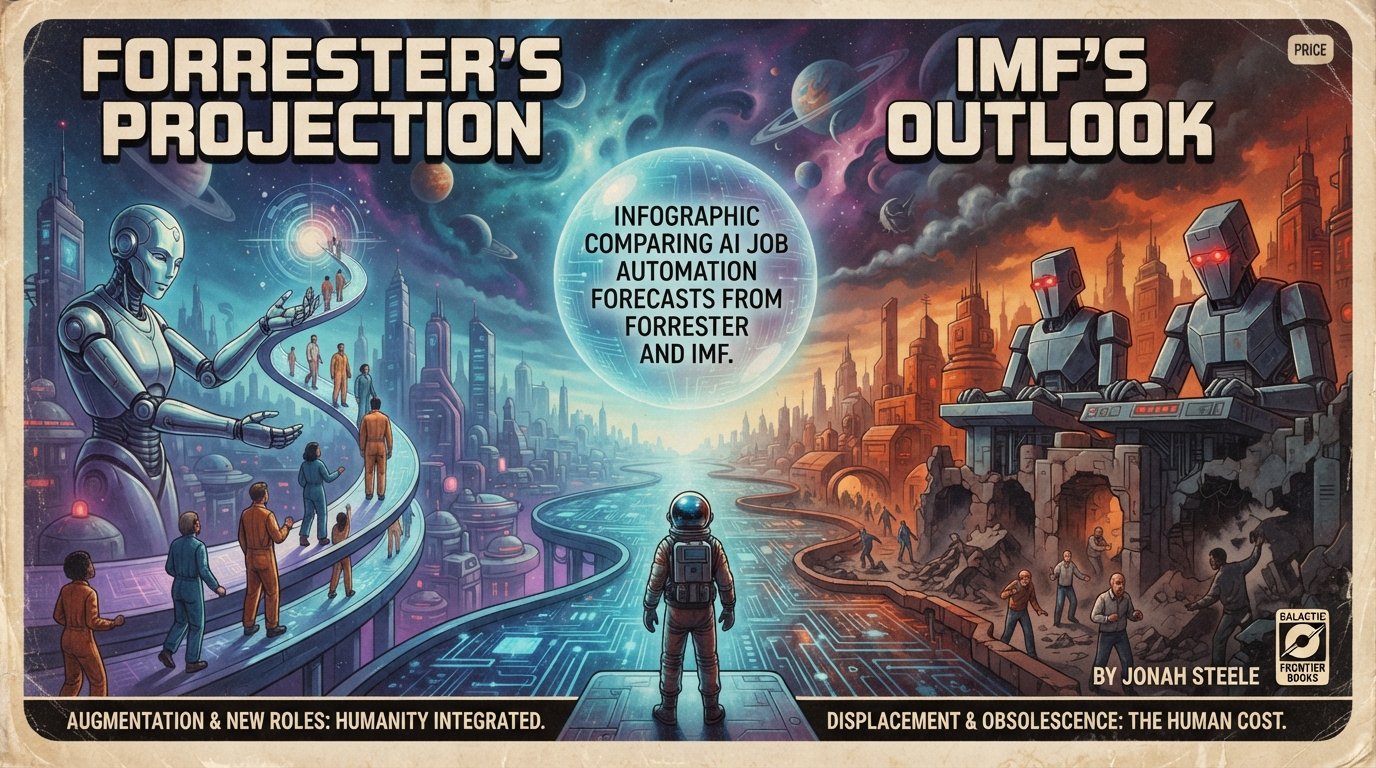
The most common fear about AI is job displacement, especially for white-collar and entry-level workers. The evidence is mixed: AI has been linked to over 180,000 corporate job losses since 2023, yet economists find little evidence of widespread aggregate unemployment so far. The bigger near-term risk is job transformation, not total elimination.
Quick Facts
| Item | Details |
|---|---|
| Most Common Fear | Job loss and economic displacement, particularly among white-collar, entry-level, and administrative workers |
| Who Is Most Affected | Workers ages 22–25 in AI-exposed fields, women in clerical and administrative roles (86% of the most vulnerable group), and entry-level software developers |
| Is the Fear Evidence-Based? | Partially. AI is reshaping work, but forecasts of mass unemployment remain contested. Forrester estimates only 6% of US jobs will be automated by 2030 |
| Expert Consensus | AI will change more jobs than it eliminates in the near term. Long-term labor market effects remain uncertain |
| Related Research | Atlanta Fed working paper (2026), Stanford Digital Economy Lab (2026), Forrester AI Job Impact Forecast (2026), IMF labor market analysis (2026) |
| Where to Learn More | NIST AI Risk Management Framework, EU AI Act, OpenAI and Anthropic safety publications, World Economic Forum Future of Jobs Report |
| Updated For | September 2026 |
What People Actually Fear About AI
People fear AI for different reasons depending on who they are and what they do for a living. The fears cluster into distinct categories, each with its own evidence base and its own level of realistic risk.
The most common fear is straightforward: losing your job to a machine. But that fear branches into more specific anxieties — that your skills will become obsolete, that you will be unable to retrain fast enough, that your children will enter a workforce that no longer needs them, or that the entire concept of a career is being dismantled in real time. Beyond employment, people worry about deepfakes eroding trust in what they see and hear, about surveillance systems tracking their behavior, about AI weapons making life-and-death decisions without human judgment, and about a loss of genuine human connection as chatbots replace real relationships.
A 2026 survey of corporate executives found that AI adoption is widespread but uneven, with limited near-term job loss alongside significant shifts in what kinds of jobs exist. That finding captures the tension at the heart of the debate: the aggregate numbers look calm, but the compositional changes are real and unevenly distributed.
Job Loss and Automation: What the Data Shows

AI has been directly linked to more than 180,000 corporate job losses since May 2023, including 112,000 in 2026 alone, according to executive outplacement firm Challenger, Gray and Christmas. Companies including Oracle, Salesforce, Lufthansa, Accenture, and Standard Chartered have cited AI at least in part when announcing layoffs.
But economists urge caution in interpreting those announcements. Carl-Benedikt Frey, associate professor of AI and work at the Oxford Internet Institute, said he has “not seen any compelling evidence of the narrative that these firms are automating a lot of work,” and believes many cuts are announced to impress investors rather than reflect genuine automation.
Forrester’s 2026 forecast estimates that AI could account for 6% of total US job losses through 2030 — roughly 10.4 million roles — while projecting that AI will augment 20% of jobs over the same period. The firm also found that over half of layoffs attributed to AI will be quietly reversed as companies realize the operational challenges of replacing human talent prematurely.
Which Jobs Are Most at Risk?
The jobs most exposed to AI share a common trait: they involve routine, rule-based tasks that can be digitized.
According to multiple analyses, the highest-risk categories include:
Clerical and administrative roles. Clerical jobs face the highest exposure of all, due to generative AI’s ability to automate many of their tasks.
Entry-level white-collar positions. Junior roles in software development, marketing, customer service, and legal support are under pressure.
Software engineering. AI coding agents are transitioning from simple assistants to end-to-end engineers, shifting the profession from writing syntax to auditing complex systems.
Customer service and data analysis. These roles involve repetitive interactions and pattern recognition that AI handles well.
Finance and law support work. Early-stage legal work and financial analysis are increasingly automated.
Jobs requiring deep empathy — nursing, therapy, early childhood education — and skilled trades like plumbing, carpentry, and construction are among the least vulnerable because they require manual dexterity in unpredictable environments and genuine human interaction.
Who Is Most Affected?
The burden is not evenly distributed.
Young workers are hit hardest. Stanford University’s analysis found a 2.7% employment decline for workers ages 22–25 since ChatGPT became widespread, rising to 12.8% in the most AI-exposed sectors such as finance, software, and creative industries. A separate Stanford Digital Economy Lab analysis found employment for workers ages 22–25 in the two most exposed quintiles fell about 11% between November 2022 and June 2026.
Women are disproportionately represented in the most vulnerable roles. According to research from Brookings and GovAI, 86% of the 6.1 million US workers identified as highly exposed and least adaptable to AI are women, many in administrative, clerical, HR, and middle-management positions.
Workers in advanced economies face higher exposure. The IMF estimates that roughly 60% of jobs in advanced economies will be affected by AI — either augmented, replaced, or reshaped — compared to 40% globally.
What Experts Actually Say (and How Their Views Have Shifted)
Expert opinion on AI job displacement is not monolithic. It ranges from cautious optimism to stark warnings, and several prominent voices have changed their tone.
Anthropic CEO Dario Amodei said AI could wipe out half of all entry-level white-collar jobs, leading to unemployment of up to 20%. OpenAI CEO Sam Altman predicted AI could take over as much as 40% of work tasks. Google DeepMind CEO Demis Hassabis has said the transition of work to AI will happen quickly.
But a calmer consensus has developed. A National Bureau of Economic Research survey of 6,000 business executives found they expected AI to slightly improve productivity while causing a relatively modest 0.7% dip in employment over three years. Goldman Sachs suggested a 10-year rollout could lead to a 0.6 percentage point rise in the unemployment rate. A Stanford study concluded there is “little evidence” that AI is causing significant job losses right now.
Both Amodei and Altman have recently walked back their grim assessments. The pattern suggests that the initial wave of alarmist predictions was driven partly by hype and partly by genuine uncertainty about how quickly AI capabilities would translate into workplace adoption.
Misinformation and Deepfakes
Deepfakes — synthetic media created with AI that realistically depicts people saying or doing things they never did — represent one of the fastest-growing AI risks.
An analysis of more than 10,000 deepfake incidents between January 2020 and March 2026 found that the United States accounted for 46.9% of recorded incidents. X was the largest propagation channel at 51.2%, followed by TikTok at 21.1%, YouTube at 10.0%, and Facebook at 8.2%. Political manipulation made up 24.6% of cases, and fraud-related incidents accounted for 20.1%.
The scale is staggering. An estimated 15 billion fake AI-generated images have been shared on social media platforms since 2022, and about 71% of visual content circulating online is believed to be AI-generated.
A Harvard Kennedy School survey of 54 international experts found that video deepfakes received the highest threat ratings in the political domain, averaging 6.31 on a 7-point scale. Election interference via deepfake video was rated as the top urgent risk by 78% of respondents. In the health domain, AI-generated text was rated as the highest threat, while in finance, audio deepfakes raised the most concern.
What you should do: Verify video and audio content through multiple independent sources before sharing. Be skeptical of emotionally charged political content, especially during election periods. Voice cloning fraud — where scammers use AI to impersonate a family member or colleague — is an area experts say warrants particular attention.
Privacy and Surveillance
AI systems collect and analyze unprecedented amounts of personal data. The European Data Protection Supervisor has noted that increasing amounts of data are being collected and information on human behavior is being monitored, creating new challenges for privacy.
Existing AI systems can restrict freedom of expression and association, undermine the right to privacy, and fuel mass surveillance. UNESCO’s Recommendation on the Ethics of Artificial Intelligence, endorsed by all member states, explicitly rejects the use of AI for social scoring and mass surveillance.
What this means for you: Be aware that many free AI tools monetize user data. Review privacy policies, limit the personal information you share with AI chatbots, and support organizations that advocate for data protection. The Global Privacy Control standard allows you to signal your privacy preferences to websites automatically.
Loss of Human Skills and Connection
One of the quieter concerns about AI is that it may erode the very skills that make us human.
Research published in 2026 raised the “use it or lose it” possibility — that relying on chatbots to facilitate social interactions could degrade the human ability to engage in harmonious interactions with other humans. Experts warn that using AI to navigate social interactions may be stunting emotional growth, leaving young people less prepared for the messiness of human connection.
As of 2025, over 70% of teens and nearly one-third of US adults reported relying on AI for companionship and emotional support, with many preferring these chatbot relationships over human ones.
What you should do: Treat AI as a tool, not a substitute for human relationships. Prioritize unstructured time with family and friends. If you are a parent, set clear boundaries around AI use and model healthy human interaction.
AI and Children: Education and Safety
AI is reshaping how children learn, socialize, and develop. The risks are distinct from those facing adults.
A 2026 report from the American Psychological Association warned that student engagement with educational technology is not the same as learning — and that generative AI tools pose particular risks by improving immediate performance without building underlying knowledge or skills.
Researchers at Children’s Hospital of Philadelphia emphasized that AI may lack necessary guardrails and respond inappropriately to questions related to mental health or suicide. Families should address boundaries of AI use and should not view AI as a replacement for adolescents developing their own socialization and critical thinking skills.
Practical guidance for parents and educators:
Set age-appropriate limits on AI tool use.
Prioritize unstructured play and face-to-face social interaction.
Discuss what AI is, how it works, and where it fails.
Monitor for signs of over-reliance on AI for emotional support.
Advocate for school policies that treat AI as a tool, not a teacher.
Existential Risk and Superintelligence
Existential risk refers to the possibility that advanced AI could lead to human extinction or permanent civilizational collapse. This is the most speculative and contested category of AI risk, but it is taken seriously by a significant minority of researchers.
Expert surveys find a median extinction probability of 5–14% by 2100, with Nobel laureate Geoffrey Hinton estimating a 10–20% chance within 30 years. Roughly 40% of surveyed AI researchers indicated greater than a 10% chance of catastrophic outcomes from AI progress.
Anthropic safety researcher Evan Hubinger has stated there is more than a 10% chance that AI could “kill all humans” within the next decade.
How to think about this: Existential risk is not a near-term concern in the way job loss or misinformation are. The scenarios that worry researchers involve AI systems that are vastly more capable than current models and operate with limited human oversight. The key policy question is whether current safety research is adequate to the challenge. As of early 2026, only about 373 people across OpenAI, Google DeepMind, Anthropic, and xAI — out of more than 11,000 employees — worked full-time on making AI safe.
AI in Weapons and Warfare
Lethal autonomous weapons systems — often called “killer robots” — are weapons that can select and engage targets without human control. The UN Secretary-General and the President of the International Committee of the Red Cross have renewed their call for stricter global controls, warning that AI advances could reduce human control over the use of lethal force.
At the 2026 REAIM summit in Spain, only 35 of 85 attending countries signed a commitment to 20 principles on military AI, including affirming human responsibility over AI-powered weapons. The US and China opted out of the joint declaration.
The Seventh Review Conference of the Convention on Certain Conventional Weapons, scheduled for November 2026, is seen as a key opportunity to launch negotiations on a legally binding instrument.
Why this matters: Decisions about when to use lethal force are among the most consequential any society makes. Allowing machines to make those decisions without meaningful human judgment raises profound legal and ethical questions that current international law does not fully address.
Bias and Discrimination in AI Systems
AI systems can reproduce and amplify existing social inequalities. Research has demonstrated that algorithmic bias not only reflects but also exacerbates existing social inequalities.
According to the International Labour Organization, AI systems can reproduce discrimination in automated recruitment, algorithmic management of work, and performance assessments. The Inter-American Commission on Human Rights has called on states to take effective measures to prevent algorithmic discrimination against Afro-descendant persons.
In a landmark 2026 case, a federal judge allowed algorithmic discrimination claims to proceed against Workday, rejecting the company’s argument that it merely supplies a screening tool rather than making hiring decisions itself.
What you should do: If you are subject to an AI-driven hiring or evaluation system, ask how the system works and whether it has been audited for bias. If you are an employer, ensure that any AI tools used in hiring or performance evaluation are tested for disparate impact across protected groups.
Regulation and Government Response
Governments are moving to regulate AI, but the landscape is fragmented and evolving rapidly.
United States: In June 2026, President Trump signed Executive Order 14409, “Promoting Advanced Artificial Intelligence Innovation and Security.” The order explicitly states that it does not authorize mandatory government licensing, pre-clearance, or permitting requirements for AI model development. It establishes a voluntary framework and directs federal agencies to challenge state-level AI regulations that are seen as inconsistent or overly burdensome.
European Union: The EU AI Act classifies AI systems used in employment decisions — recruitment, selection, promotion, termination, task allocation, and performance monitoring — as high-risk. However, the implementation of these obligations has been delayed until December 2, 2027, following the Digital Omnibus agreement. Demand for algorithm auditors and compliance experts has surged by 160% as organizations prepare.
International: The NIST AI Risk Management Framework, published in January 2023, provides voluntary guidance organized around four functions: Govern, Map, Measure, and Manage. It has become the de facto US federal AI governance baseline and is widely used as an operational companion to EU AI Act compliance.
How to Protect Yourself and Your Career
The most effective career protection is not to resist AI but to understand it and position yourself where human judgment, creativity, and relationships matter most.
Step 1: Audit your tasks. List the ten most important things you do at work. For each, ask: Can AI do this today? Can it assist? Does it require human judgment, trust, or physical presence? This exercise reveals which parts of your role are most exposed.
Step 2: Build AI fluency. Workers with AI skills command a 56% wage premium over peers in identical roles without those skills, according to PwC research. That premium more than doubled from 25% a year earlier. Learning to use AI tools effectively is not optional — it is increasingly a baseline expectation.
Step 3: Invest in structurally hard-to-automate skills. CNN’s career guidance recommends focusing on creative, interpersonal, and physical skills — areas where AI struggles.
Step 4: Stay market-aware. Even if you are happy in your current role, monitor job listings in your field. Understand which skills are in demand and which are declining.
Step 5: Build your network. Human relationships are a career asset that AI cannot replicate. Strong professional networks provide information, opportunities, and support that no algorithm can match.
Decision Tree: Is This Fear Realistic for Me?
Are you in a role that involves routine, rule-based tasks?
→ Yes: Higher risk. Start upskilling now.
→ No: Continue to the next question.
Does your work require deep empathy, physical dexterity, or complex human relationships?
→ Yes: Lower risk in the near term.
→ No: Moderate risk. Focus on building AI collaboration skills.
Are you in an entry-level position in a white-collar field?
→ Yes: Higher risk. Consider specializing or moving toward roles that require judgment and experience.
→ No: Assess your specific tasks using the audit above.
Does your employer view AI as a tool for augmentation or replacement?
→ Augmentation: You have time to adapt.
→ Replacement: Start planning your transition now.
Common Questions
Will AI take my job in the next five years?
It depends on your role. Forrester estimates only 6% of US jobs will be automated by 2030, and over half of AI-attributed layoffs will be reversed. The bigger risk is job transformation — your role may change significantly even if it is not eliminated.
Which jobs are safest from AI?
Jobs requiring deep empathy (nursing, therapy, early childhood education) and skilled trades (plumbing, carpentry, construction) are among the least vulnerable because they require human judgment in unpredictable physical environments.
Are young workers really more at risk?
Yes. Stanford research found a 2.7% employment decline for workers ages 22–25 since ChatGPT launched, rising to 12.8% in the most AI-exposed sectors. Entry-level roles are more vulnerable because they involve more routine tasks.
Is AI job loss worse for women?
The data suggests yes. 86% of the 6.1 million US workers identified as most vulnerable to AI displacement are women, largely in administrative and clerical roles.
What should I study to be safe from AI?
There is no guaranteed safe major. The most durable strategy is to develop a combination of technical literacy, critical thinking, and human relationship skills. AI skills themselves command a significant wage premium.
Are deepfakes a real threat to elections?
Yes. A Harvard survey of 54 experts rated election interference via deepfake video as the top urgent AI risk, with 78% of respondents flagging it. Political manipulation accounts for nearly a quarter of all deepfake incidents.
Is AI regulated in the United States?
The US currently relies on a voluntary framework established by Executive Order 14409 (June 2026), which explicitly avoids mandatory licensing and preempts state-level regulations. The EU AI Act is more prescriptive but has delayed key employment-related obligations until December 2027.
What is the NIST AI Risk Management Framework?
It is voluntary guidance published by the National Institute of Standards and Technology in January 2023 to help organizations identify, measure, and manage risks across the life of an AI system. It is organized around four functions: Govern, Map, Measure, and Manage.
Should I let my children use AI chatbots?
With caution and boundaries. The American Psychological Association warns that engagement with AI tools is not the same as learning, and pediatric researchers caution that AI may lack guardrails for mental health topics. Prioritize human interaction and critical thinking.
What are AI companies doing about safety?
As of early 2026, only about 373 people across OpenAI, Google DeepMind, Anthropic, and xAI worked full-time on AI safety out of more than 11,000 total employees. All major labs publish safety research, but the ratio of safety staff to total staff remains small.
Key Takeaways
AI has been linked to 180,000+ job losses since 2023, but economists find little evidence of widespread aggregate unemployment so far.
Forrester estimates only 6% of US jobs will be automated by 2030; over half of AI-attributed layoffs will likely be reversed.
Young workers (ages 22–25) and women in administrative roles face the highest displacement risk.
Workers with AI skills earn a 56% wage premium over peers without them.
Deepfakes are proliferating rapidly — 15 billion fake AI images since 2022 — with election interference rated the top urgent risk.
Existential risk from AI is taken seriously by a significant minority of researchers, with median extinction probability estimates of 5–14% by 2100.
US regulation relies on voluntary frameworks; the EU AI Act classifies employment-related AI as high-risk but has delayed enforcement until December 2027.
The most effective career protection is AI fluency combined with skills that are structurally hard to automate: empathy, creativity, physical dexterity, and human judgment.
AI will change more jobs than it eliminates in the near term; the challenge is adaptation, not extinction.
Official & Trusted Resources
Atlanta Federal Reserve: “Artificial Intelligence, Productivity, and the Workforce: Evidence from Corporate Executives” (Working Paper 2026-4)
Stanford Digital Economy Lab: “No Widespread Displacement, but the AI Employment Gap for Young Workers Has Widened to 19%” (August 2026)
Forrester: “The Forrester AI Job Impact Forecast, US, 2025–2030”
NIST: AI Risk Management Framework (AI RMF 1.0) and Generative AI Profile (NIST AI 600-1)
EU AI Act: Regulation (EU) 2024/1689
IMF: “AI Will Transform the Global Economy. Let’s Make Sure It Benefits Humanity” (2026)
World Economic Forum: Future of Jobs Report 2026
OpenAI: Safety and alignment publications
Anthropic: Responsible scaling policy and safety research
Google DeepMind: Safety and ethics publications
Harvard Kennedy School Misinformation Review: “Experts disagree on how to fight AI disinformation” (July 2026)
UN/ICRC: Joint appeal on lethal autonomous weapons (August 2026)