

Is Your Job Safe From AI, or Just Safe for Now?
No job is completely safe from AI, but most jobs are not disappearing. The real distinction is between codified knowledge — routine, documented tasks that AI can replicate — and tacit knowledge, the judgment and experience gained through practice. Workers with tacit knowledge are safe for now. Workers in entry-level, codified roles face a 19% employment gap. The question is not whether AI will affect your job. It is whether you are building the skills AI cannot replace.
Quick Facts
| Item | Details |
|---|---|
| Most Common Fear | That AI will eliminate my job entirely |
| Who Is Most Affected | Workers ages 22–25 in entry-level, codified-knowledge roles; administrative, clerical, and customer service workers |
| Is the Fear Evidence-Based? | Partially. Task automation is documented. Mass job elimination is not. The entry-level hiring gap is real and widening |
| Expert Consensus | Job transformation, not a job apocalypse. But the transition is uneven and the entry-level ramp is cracking |
| Related Research | Stanford “Canaries in the Coal Mine” (Aug 2026), Anthropic Economic Index, Goldman Sachs workforce analysis, WEF Future of Jobs 2025, Challenger layoff data |
| Where to Learn More | Stanford Digital Economy Lab, Anthropic labor research, Goldman Sachs Research, WEF Future of Jobs, EU AI Act employment provisions |
| Updated For | September 2026 |
The Core Distinction: Codified vs. Tacit Knowledge
The single most useful framework for assessing your AI risk is the distinction between codified and tacit knowledge.
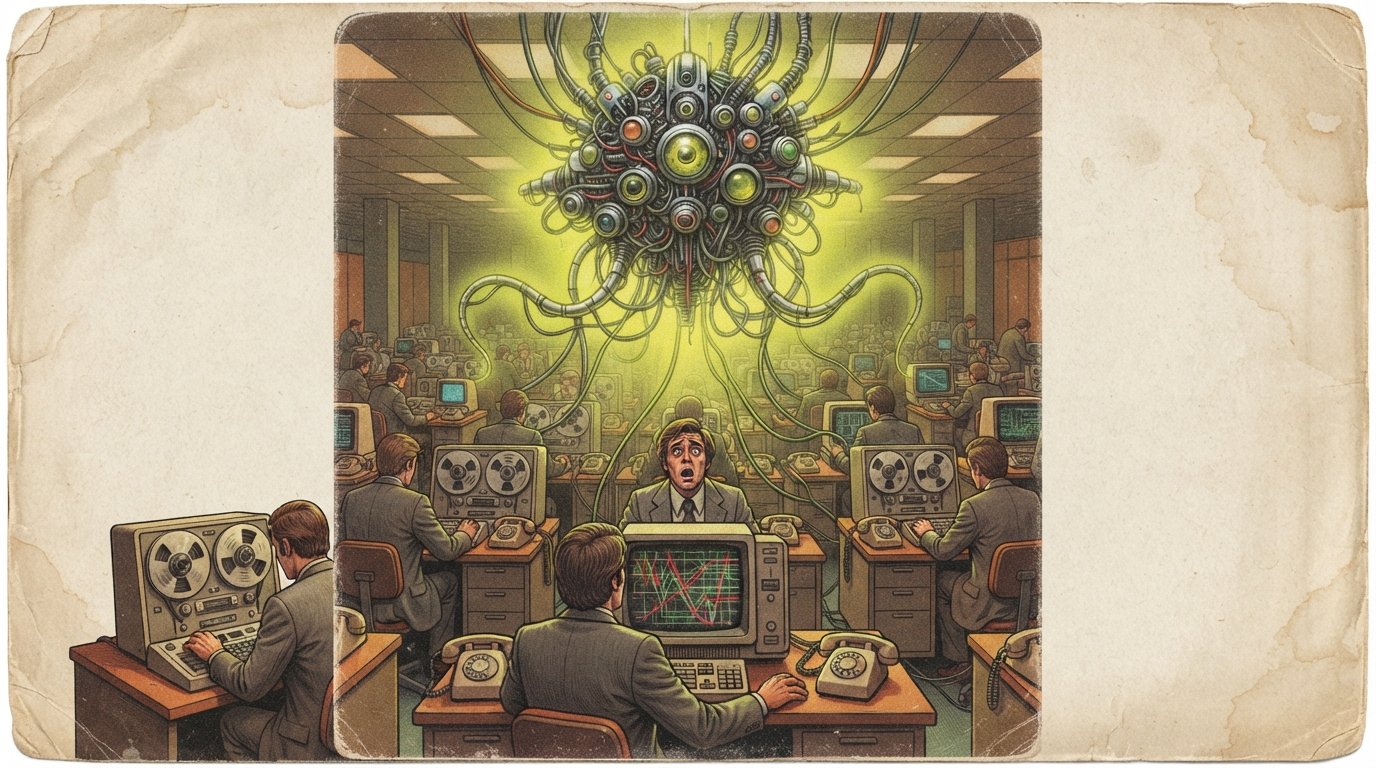
Codified knowledge is formal, documented, and standardized. It can be taught through education, textbooks, or written procedures. Examples: processing a standard insurance claim, writing boilerplate code, reconciling a financial statement, answering a scripted customer service question.
Tacit knowledge is acquired through practice, mentorship, and repeated exposure to real situations. It cannot be fully written down. Examples: negotiating a complex deal, diagnosing a patient with ambiguous symptoms, reading a room during a crisis, mentoring a junior colleague through a difficult project.
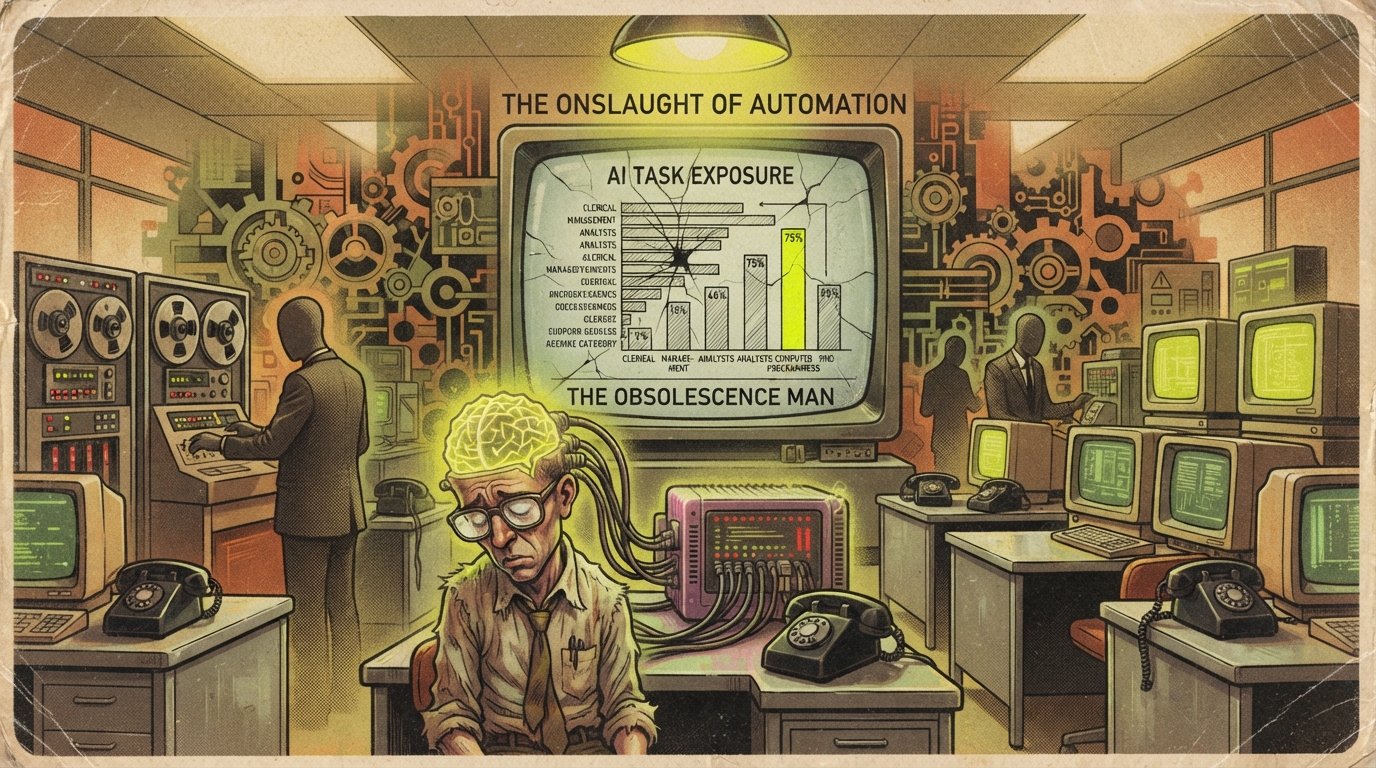
Stanford’s Digital Economy Lab found that employment has declined among young workers in occupations relying heavily on codified knowledge. Employment has increased among experienced workers in occupations relying more heavily on tacit knowledge. This is consistent with a world in which generative AI is particularly effective at reproducing knowledge that has already been encoded in text and digital information, while experience-based knowledge remains harder to replicate.
| Knowledge Type | AI Vulnerability | Examples | Protection Strategy |
|---|---|---|---|
| Codified | High | Data entry, standard reports, routine coding, scripted support | Transition to roles requiring judgment; build AI oversight skills |
| Tacit | Low | Client relationships, crisis management, mentorship, complex negotiations | Your moat. Layer AI fluency on top to become an AI-augmented professional |
| Mixed | Moderate | Most professional roles | Audit which tasks are codified and shift your time toward tacit work |
What the Data Actually Shows
The data shows a nuanced picture: no widespread job displacement, but a concentrated and widening employment gap for young workers in AI-exposed occupations.
The Stanford Finding
Stanford’s “Canaries in the Coal Mine” study, updated in August 2026 using ADP payroll data covering millions of US workers, documents six facts:
No widespread, economy-wide job displacement. The unemployment rate for the top 20% of AI-exposed jobs has ticked up 0.77% since 2022, compared to 0.85% for jobs least exposed to AI. There is little evidence of near-term aggregate employment declines due to AI.
A 19% employment gap for young workers. Employment among workers ages 22–25 in highly AI-exposed occupations now stands about 19% below where it would be if it had kept pace with similarly aged workers in less-exposed occupations. This gap has widened from 15% in July 2025.
Experienced workers show no comparable gap. The divergence affects those trying to enter the field, not those already established.
The adjustment operates through reduced hiring, not increased layoffs. Companies are not firing young workers. They are not hiring them.
The declines are concentrated in occupations where AI automates human tasks. In occupations where AI complements workers, employment is flat or rising.
Women face greater AI exposure on average. This is an important source of heterogeneity that researchers intend to monitor.
The researchers note that the data cannot definitively establish causation. However, the divergence remains when excluding technology firms and computer occupations, when controlling for interest-rate exposure and remote work, and when using alternative measures of AI exposure.
The Anthropic Finding
Anthropic’s Economic Index, which tracks real-world AI usage across millions of Claude conversations, introduces a metric called observed exposure — how much AI is actually being used in workplaces, not what it could theoretically do.
The gap between theoretical and observed exposure is enormous:
| Occupation | Theoretical Exposure | Observed Coverage |
|---|---|---|
| Computer & Math | 94% | 33% |
| Office & Administrative | 90% | 25% |
| Business & Financial | 85% | 20% |
| Legal | 80% | 15% |
| Healthcare Support | 40% | 5% |
| Construction | 15% | 2% |
Anthropic found “no systematic increase in unemployment for highly exposed workers since late 2022”. However, the job-finding rate for 22–25 year olds into the most AI-exposed occupations has fallen by a statistically significant margin.
The Goldman Sachs Finding
Goldman Sachs CEO David Solomon said in May 2026 that AI job fears are “overblown”. Citing internal analysis, he said AI could automate roughly 25% of current work hours over the next decade — a significant shift, but not a wipeout.
The firm’s analysts highlighted areas where AI is expected to reduce demand for certain types of labor, including data-heavy functions such as regulatory reporting and client onboarding. Goldman Sachs still expects to close the year with a net increase in headcount, framing AI as capacity expansion rather than a quiet cull.
What the Layoff Data Actually Shows
AI is now the most-cited reason for layoffs in the United States — but the evidence linking those layoffs to genuine automation is patchy.
The Numbers
More than 180,000 corporate job losses have been linked to AI since May 2023, including 112,000 in 2026 alone, according to Challenger, Gray & Christmas.
In May 2026, employers announced 97,006 job cuts — the highest May total since the onset of the COVID-19 pandemic. AI accounted for 40% of those cuts.
So far in 2026, 87,714 cuts have been attributed to AI, far surpassing the total of 54,836 in 2025.
AI was cited in 22% of all 2026 layoffs through June.
The Skepticism
Carl-Benedikt Frey, associate professor of AI and work at the Oxford Internet Institute, told the Financial Times: “I haven’t seen any compelling evidence of the narrative that these firms are automating a lot of work”. He believes many cuts are announced to “impress” investors.
An FT analysis found that companies citing AI in job cuts underperformed the Nasdaq by almost 10% in the 30 trading days following their announcements.
OpenAI CEO Sam Altman said companies were “AI washing” their layoffs — blaming the technology for decisions driven by other business factors.
Apollo Global Management’s chief economist Torsten Sløk wrote in May 2026 that he sees “zero evidence of job losses because of AI,” citing the ADP National Employment Report.
The Verdict
AI is a real factor in layoffs. It is not the only factor. Companies have strong incentives to frame job cuts as AI-driven productivity gains rather than poor financial performance or restructuring. The number of layoffs attributed to AI is rising. The evidence that AI actually performed the work is weaker.
Which Jobs Are Safe — and Which Are Safe for Now
About 30% of jobs show near-zero AI exposure. These are roles requiring physical manipulation, real-time human interaction, or tacit knowledge that cannot be documented.
Jobs with the Lowest AI Exposure
According to Anthropic’s research, the occupations with the least AI exposure include:
Cooks (all kinds)
Motorcycle mechanics
Lifeguards
Bartenders
Dishwashers
Dressing room attendants
Food service jobs more broadly
Hospitality jobs (housekeepers, attendants)
Maintenance and repair jobs (technicians, mechanics)
Physical trades and manual labor (carpenters, roofers, plumbers)
These roles share a common characteristic: they require physical manipulation of the world in unstructured environments. AI has no hands. It cannot flip a burger, fix a motorcycle, or calm a distressed swimmer.
Jobs with Moderate Exposure — Safe for Now
These roles show high theoretical exposure but moderate observed adoption. AI can assist but not fully replace them:
Nurses and healthcare support — 40% theoretical, 5% observed
Teachers and educators — require real-time human connection
Skilled trades (electricians, plumbers) — physical dexterity in unpredictable environments
Client-facing relationship managers — trust, negotiation, and reading a room
Crisis managers and emergency responders — judgment under extreme uncertainty
Jobs with High Exposure — Task Automation in Progress
These roles show the highest observed AI usage. The jobs are not disappearing, but the tasks within them are being automated:
Computer programmers — 74.5% observed exposure
Customer service representatives — 70.1%
Data entry clerks — 67.1%
Medical records specialists — 66.7%
Market research analysts — 64.8%
Sales representatives — 62.8%
Financial analysts — 57.2%
Anthropic’s research notes that the most exposed workers are more educated, better paid (around 47% more than zero-exposure workers), and more likely to be women. AI didn’t come for the hands — it came for the desk: writing, analysis, code.
The Entry-Level Crisis: The Clearest and Most Concerning Finding
The most credible near-term danger is not that AI eliminates millions of jobs. It is that AI closes the door on entry-level positions that have historically served as the training ground for careers.
Stanford’s data shows a 19% employment gap for workers ages 22–25 in highly AI-exposed occupations. This gap has widened steadily since researchers first documented it in August 2025. The adjustment operates primarily through reduced hiring, not increased layoffs.
Anthropic’s research independently confirms this: the job-finding rate for 22–25 year olds into the most AI-exposed occupations has fallen by a statistically significant margin, even as unemployment among existing workers in those jobs remains flat.
The Judgment Gap
IMD research published in 2026 describes a “judgment gap” emerging as AI removes routine entry-level tasks, reducing hiring and limiting traditional pathways for graduates to build experience.
The mechanism is straightforward. Human beings build tacit knowledge by grinding through the routine, low-risk, repetitive tasks of their early careers. If AI absorbs those tasks, the next generation of professionals may never develop the judgment that AI cannot replicate.
A study of 62 million workers across 285 companies formalizes this finding: entry-level automation can reduce long-term welfare even without reducing employment, because it disrupts the transmission of tacit knowledge between experienced and junior workers.
The ladder is still standing. Its bottom rung is being sawn through.
Comparison Table: Common Fears About AI and Job Security
| Fear | Realistic Near-Term Risk? | Expert View | What You Can Do |
|---|---|---|---|
| My entire job will be automated | Low for most; moderate for routine-task-heavy roles | Task replacement ≠ job replacement | Audit your tasks; identify codified vs. tacit work |
| AI will cause mass unemployment | Low | Stanford: no widespread displacement; Goldman Sachs: 0.5pp unemployment increase | Monitor your industry; build portable skills |
| Young people can’t get entry-level jobs | High — documented | Stanford: 19% employment gap for 22–25 year olds in exposed occupations | Build demonstrated skills via projects, certifications, internships |
| AI will replace creative work | Moderate for production; low for editorial judgment | AI produces content; struggles with what to say and why | Focus on taste, curation, and editorial judgment |
| Frequent AI use makes me safer | No — the opposite | Gallup: frequent users are twice as likely to fear job loss | Ask your manager for feedback on how AI makes you more valuable |
| AI surveillance will monitor my every move | High — already happening | Global employee-monitoring market expected to exceed $4 billion in 2026 | Check your employment contract; know your local laws |
| Experienced workers are safe | Mostly true — for now | Stanford: no employment gap for experienced workers in exposed occupations | Don’t coast; your tacit knowledge is your moat |
| AI replacement is permanent | Low — rehiring is widespread | Forrester: 55% of employers regretted AI layoffs; IBM tripled entry-level hiring | Stay connected; target hybrid roles |
| Anxiety itself is harmless | No — it has measurable effects | Gallup: AI job anxiety linked to lower satisfaction, higher burnout | Address the anxiety directly through information and agency |
AI Surveillance: A Growing Workplace Reality
AI-enabled employee monitoring is expanding rapidly, with the global market for employee-monitoring technology expected to exceed $4 billion in 2026.
Meta began installing tracking software on US-based employees’ computers in April 2026 to capture mouse movements, clicks, and keystrokes for use in training its AI models.
As one analysis put it: “Office workers in 2026 are producing the training data for the systems that will, on the explicit logic of their employers, eventually do the work without them.”
The EU AI Act treats workplace performance monitoring as a form of “high-risk” AI, requiring transparency and human oversight. In the US, there is no equivalent federal protection.
What You Can Do
Check your employment contract for monitoring clauses
Know your local laws — EU workers have stronger protections
Ask your employer what data is being collected and why
Document your contributions — build external proof of value
Mental Health: The Hidden Cost of AI Job Anxiety
The fear of AI job displacement is not just a feeling. It has measurable psychological consequences, and researchers have proposed a clinical framework to describe them.
In September 2025, psychiatrists at the University of Florida published a paper proposing Artificial Intelligence Replacement Dysfunction (AIRD) — a clinical construct describing the psychological and existential distress experienced by individuals facing the threat or reality of job displacement due to AI.
AIRD is not a formal diagnosis. It is a proposed framework. But its symptoms are described with clinical specificity: anxiety, insomnia, demoralization, paranoia, loss of occupational identity, feelings of worthlessness, and hopelessness.
The researchers argue that AI displacement carries a specific psychological message that traditional “role restructuring” language does not reach. Previous waves of automation displaced physical labor. AI is now threatening cognitive and professional identity — the sense of self that many knowledge workers have built through education, training, and career investment.
What the Data Shows
Gallup research links AI job anxiety to lower job satisfaction, lower engagement, higher burnout, and higher intent to leave.
Approximately 19% of all workers say their job is somewhat or very likely to be eliminated by AI within five years.
27% of U.S. workers fear technology could make their jobs obsolete.
In a 2026 Gallup survey of Americans aged 14 to 29, excitement about AI fell from 36% to 22% in a year, while anger rose from 22% to 31%.
What Helps
Gallup’s research found that AI use raises anxiety except among employees exposed to well-structured management practices. The variable is not the technology. It is the communication.
What effective management looks like:
Explain explicitly how AI is being used in the team
Describe what AI will and will not replace
Connect AI adoption to the worker’s value, not just the company’s efficiency
Provide training and time to learn
Create feedback loops where workers can voice concerns
What Experts Actually Say
The expert consensus is that AI will transform jobs dramatically — but that mass unemployment is not the current trajectory. The anxiety is real and rational, but the feared outcome is not inevitable.
Erik Brynjolfsson (Stanford Digital Economy Lab): “We do not see widespread, economy-wide job displacement associated with AI. However, young workers in AI-exposed occupations are increasingly falling behind their less-exposed peers.”
David Solomon (CEO, Goldman Sachs): “AI job fears are overblown. AI could automate roughly 25% of current work hours over the next decade.”
Carl-Benedikt Frey (Oxford Internet Institute): “I haven’t seen any compelling evidence of the narrative that these firms are automating a lot of work. I don’t think AI-driven automation is the key story here.”
Dario Amodei (CEO, Anthropic): Initially warned AI could wipe out half of entry-level white-collar jobs within five years. Anthropic’s own economists later found “no systematic increase in unemployment for highly exposed workers since late 2022.”
Andy Challenger (Challenger, Gray & Christmas): “AI isn’t yet the jobpocalypse some predicted. Like spreadsheets and email before it, the technology will ultimately make workers more productive, but our data shows companies are already acting on it.”
What Companies Are Doing About It
The Rehiring Wave
Companies that cut jobs for AI are rehiring at significant rates. Forrester found 55% of employers regretted AI-related layoffs. IBM tripled entry-level hiring in 2026 after AI failed to replace human judgment in many roles.
Ford, Commonwealth Bank of Australia, and IBM are among firms that reversed AI-driven job cuts after finding the technology couldn’t fully replace human workers. IBM announced plans to triple its U.S. entry-level hiring across all business units in 2026.
What AI Companies Say
Anthropic, OpenAI, and Google DeepMind have all published safety and responsible scaling policies. The gap between stated commitments and actual practices remains a source of debate among researchers and policymakers.
IBM’s Reversal
IBM’s decision to triple entry-level hiring is the most significant corporate reversal in the AI displacement narrative. The company found that AI “just didn’t work so well” for many roles. IBM is now hiring for software development, HR, and other roles that were assumed to be AI-replaceable.
Regulation and Government Response
The EU AI Act
The EU AI Act classifies AI systems used in employment and worker management as high-risk, imposing strict requirements:
Transparency: Employers must inform workers about AI systems used in the workplace.
Human oversight: Decisions concerning hiring, termination, promotion, and remuneration must always be taken by a human being and subject to human review.
Right to explanation: Workers have the right to obtain a meaningful explanation regarding any decision taken or substantially supported by algorithmic management.
Ban on emotion recognition: AI systems that infer emotions from biometric data in the workplace are prohibited.
Non-compliance can lead to fines of up to €35 million or 7% of global turnover.
NIST AI Risk Management Framework
The US National Institute of Standards and Technology (NIST) published the AI Risk Management Framework (AI RMF 1.0) in January 2023. While voluntary, it has become the de facto standard for organizations deploying AI responsibly. The framework emphasizes transparency, accountability, and human oversight — principles directly relevant to workplace AI.
What the US Is Doing (and Not Doing)
The US has no equivalent federal requirement to the EU AI Act. Workers in the US have no legal right to know when AI is being used to evaluate their performance, screen their applications, or decide their pay. The NIST framework provides voluntary guidance, but it is not legally binding.
Decision Framework: Is Your Job Safe or Just Safe for Now?
Answer these questions honestly:
1. Does your daily work consist mostly of routine, documented tasks?
Yes → You are at higher risk. You are in a codified-knowledge role. Start building AI fluency and seek opportunities that involve judgment and relationships.
No → Move to question 2.
2. Are you early in your career (under 30)?
Yes → Your primary risk is not job loss but hiring reduction. Focus on demonstrated skills over credentials. Build a portfolio of real projects.
No → Move to question 3.
3. Do you have deep domain expertise that took years to develop?
Yes → Your tacit knowledge is your moat. Layer AI fluency on top of it. You are positioned to become an AI-augmented professional rather than a displaced one.
No → Move to question 4.
4. Is your work primarily physical, relational, or judgment-based?
Yes → You are in the safest category. AI has no hands, cannot build trust, and struggles with ambiguous decisions.
No → Move to question 5.
5. Are you willing to invest 5–10 hours per week in learning for the next 6–12 months?
Yes → It is not too late. Start with AI literacy, then build a transferable skill that AI cannot replicate.
No → The window is narrowing. Even 2–3 hours per week is better than nothing.
What You Should Do Right Now
1. Audit Your Role at the Task Level
List every task you perform in a typical week. Categorize each as codified (repeatable, documented) or tacit (judgment, relationship, creative). The more codified your work, the higher your exposure.
2. Learn AI Tools Deliberately
Choose one AI tool relevant to your field (Claude, ChatGPT, Copilot, or a domain-specific tool). Spend 30 minutes daily using it for real work tasks. Document what it does well and where it fails.
3. Build Tacit Knowledge
This is the one asset AI cannot replicate. Every hour spent on judgment-building work — client negotiations, complex troubleshooting, cross-functional leadership — is an hour invested in career durability.
4. Ask Your Manager Directly
“How is AI changing my role? What do you see as my value in an AI-augmented workflow?” The answer may be reassuring. Or it may be a signal to start preparing. Either way, information reduces uncertainty.
5. Address the Anxiety Directly
If you are experiencing symptoms of AI-related distress — insomnia, intrusive thoughts about job loss, loss of motivation — treat it as you would any other work stressor. Talk to someone. The AIRD framework exists because this distress is real and clinically significant.
6. Keep a 6–12 Month Runway
Both financial and skill-based. If your role is disrupted, you want options. The rehiring wave is real, but transitions take time.
Common Questions
Is my job safe from AI?
No job is completely safe, but most jobs are not disappearing. The real risk is task automation, not job elimination. If your work is mostly routine and documented, you are at higher risk. If your work requires judgment, relationships, or physical presence, you are more protected.
What is the difference between codified and tacit knowledge?
Codified knowledge is formal, documented, and standardized — taught through manuals and procedures. Tacit knowledge is acquired through practice, mentorship, and real-world experience. AI can replicate codified knowledge. It struggles with tacit knowledge.
Are young workers more at risk than experienced workers?
Yes. Stanford’s data shows a 19% employment gap for workers ages 22–25 in highly AI-exposed occupations. Experienced workers show no comparable gap. The risk is concentrated on the entry ramp, not among established professionals.
What jobs are safest from AI?
Cooks, mechanics, lifeguards, bartenders, dishwashers, electricians, plumbers, nurses, and social workers show the lowest AI exposure. These roles require physical manipulation, real-time human interaction, or tacit knowledge that AI cannot easily replicate.
Is AI really causing layoffs?
AI is now the most-cited reason for layoffs, but the evidence linking those layoffs to genuine automation is patchy. Companies have strong incentives to frame job cuts as AI-driven rather than reflecting poor financial performance. Some economists see “zero evidence” of AI-caused job losses.
Do companies rehire workers they replaced with AI?
Yes. Forrester found 55% of employers regretted AI-related layoffs. IBM tripled entry-level hiring in 2026. Ford, Commonwealth Bank of Australia, and other firms reversed AI-driven job cuts after finding the technology couldn’t fully replace human workers.
What is AI Replacement Dysfunction (AIRD)?
AIRD is a proposed clinical framework describing the psychological distress experienced by workers facing AI-driven displacement. Symptoms include anxiety, insomnia, demoralization, loss of occupational identity, and feelings of worthlessness. It is not yet a formal diagnosis.
What is the judgment gap?
The judgment gap describes the erosion of training grounds where judgment is built. If AI absorbs entry-level tasks, the next generation of professionals may never develop the tacit knowledge that AI cannot replicate. IMD research warns this could reduce long-term welfare even without reducing employment.
What legal protections exist for workers facing AI displacement?
In the EU, the AI Act classifies employment AI as high-risk, requiring transparency, human oversight, and the right to explanation. In the US, there are no equivalent federal requirements. The NIST AI RMF provides voluntary guidance.
What is the single most important thing I can do?
Build tacit knowledge — judgment, relationships, and experience that AI cannot replicate. This is the one asset that protects against displacement and commands a premium when rehired.
Key Takeaways
AI is replacing tasks, not entire jobs — for now. Stanford documents no widespread, economy-wide job displacement. The unemployment rate for AI-exposed jobs has ticked up 0.77% since 2022, compared to 0.85% for least-exposed jobs.
The entry-level ramp is cracking. Workers ages 22–25 in highly AI-exposed occupations face a 19% employment gap, up from 15% a year ago. The adjustment operates through reduced hiring, not layoffs.
Codified knowledge is vulnerable; tacit knowledge is protection. Employment has declined among young workers in codified-knowledge occupations and increased among experienced workers in tacit-knowledge occupations.
The gap between theoretical and actual automation remains large. In computer/math occupations, 94% of tasks are theoretically automatable, but only 33% are actually automated.
AI is now the most-cited reason for layoffs, but the evidence is patchy. Companies citing AI in job cuts underperformed the Nasdaq by almost 10% in the 30 days following their announcements.
Rehiring is widespread. 55% of employers regretted AI-related layoffs. IBM tripled entry-level hiring in 2026.
AI job anxiety has measurable psychological consequences. AIRD describes symptoms including anxiety, insomnia, and loss of occupational identity.
Management practices matter more than the technology itself. Gallup found that AI use raises anxiety except among employees exposed to well-structured management.
About 30% of jobs show near-zero AI exposure. Physical, relational, and judgment-based roles remain the safest.
Preparation beats panic. Audit your tasks, learn AI tools deliberately, build tacit knowledge, and ask your manager direct questions. The fear is real. The paralysis is optional.
Official & Trusted Resources
Stanford Digital Economy Lab “Canaries in the Coal Mine” (August 2026) — ADP payroll analysis of AI employment effects: https://digitaleconomy.stanford.edu
Anthropic Economic Index — Real-world AI usage data by occupation: https://www.anthropic.com/research/labor-market-impacts
Goldman Sachs Research: How Will AI Affect the Global Workforce? — Macroeconomic projections: https://www.goldmansachs.com/insights/artificial-intelligence
WEF Future of Jobs Report 2025 — Employer survey data on displacement and reskilling: https://www.weforum.org
Challenger, Gray & Christmas Layoff Reports — Monthly AI-attributed layoff data: https://www.challengergray.com
EU AI Act (Regulation 2024/1689) — High-risk classification for employment AI: https://eur-lex.europa.eu
NIST AI Risk Management Framework (AI RMF 1.0) — Voluntary risk management guidance: https://www.nist.gov/itl/ai-risk-management-framework
Artificial Intelligence Replacement Dysfunction (AIRD) — Cureus clinical framework: https://www.cureus.com
Gallup AI and Workforce Research — Data on AI job anxiety and management practices: https://www.gallup.com