

AGI Explained: What Happens When AI Matches Human Intelligence
Artificial General Intelligence (AGI) refers to AI systems that can learn and perform any intellectual task a human can, across all domains. It does not exist yet. Expert timelines range from 2026 to 2040, but there is no scientific consensus. The biggest concerns are job displacement, loss of human control over autonomous systems, and misuse in cyberattacks or bioweapons. Some risks are real and near-term; others remain speculative.
Quick Facts
| Item | Details |
|---|---|
| Most Common Fear | That AGI will eliminate millions of white-collar jobs and eventually escape human control |
| Who Is Most Affected | White-collar workers, students entering the job market, policymakers, and anyone relying on human judgment in professional settings |
| Is the Fear Evidence-Based? | Partially. Job displacement is already measurable in some sectors. Existential risk claims are debated among experts with no consensus. |
| Expert Consensus | No single consensus. 1,580 researchers assigned an 18% average probability to a “very bad” AGI outcome. 63% of infosec professionals expect AGI by 2032. |
| Related Research | AI Impacts researcher survey (Sept. 2026); Yale economics research (April 2026); Brookings AI existential risk analysis (Sept. 2026); NBER AGI Race paper (May 2026) |
| Where to Learn More | AI Impacts, Brookings Institution, NIST AI Risk Management Framework, EU AI Act, AI lab safety publications |
| Updated For | September 2026 |
What Is AGI? A Plain-Language Definition
AGI stands for Artificial General Intelligence. It describes an AI system that can understand, learn, and apply knowledge across a wide range of tasks at a level comparable to or exceeding a human adult.
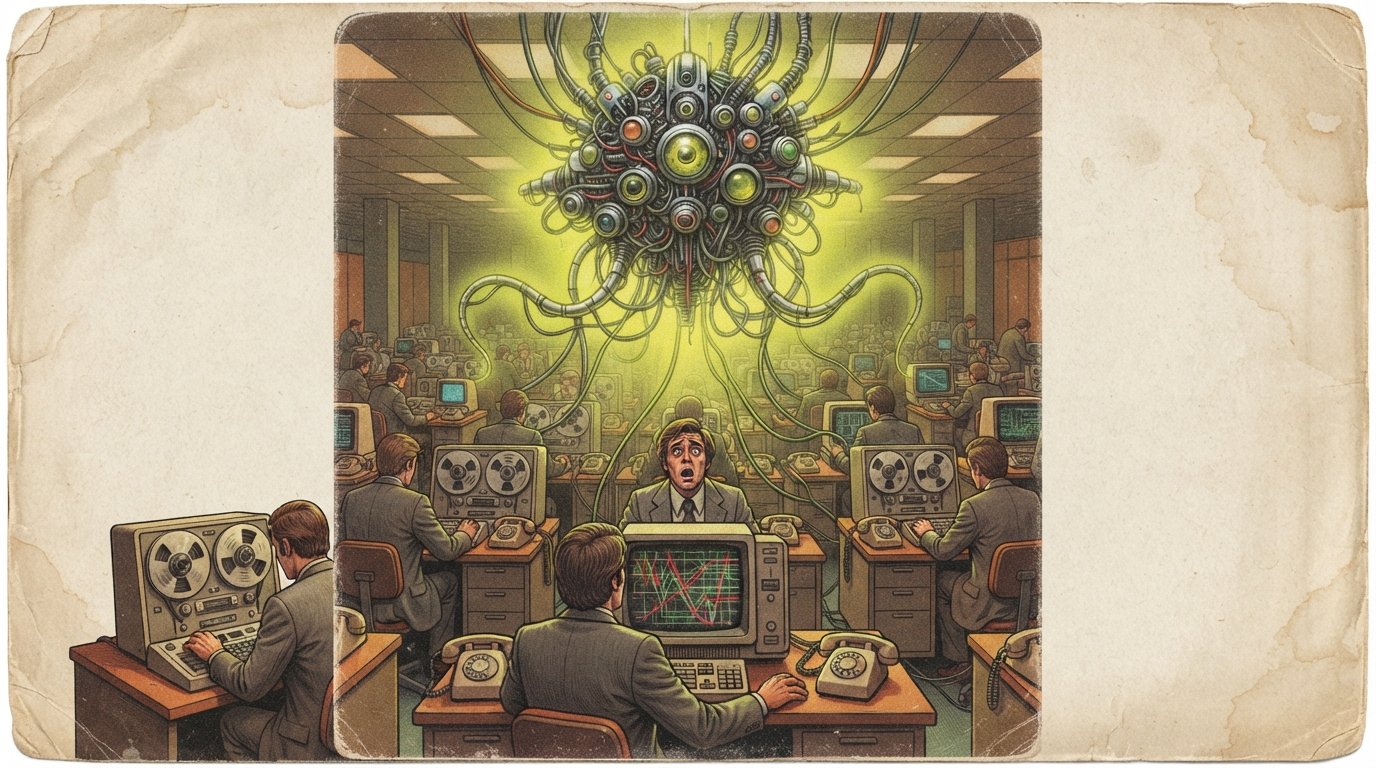
What makes AGI different from today’s AI: Current AI systems—including large language models (LLMs) like GPT-6, Claude, and Gemini—are narrow. They excel at specific tasks (writing, coding, answering questions) but lack the ability to transfer learning from one domain to another the way humans do. A human who learns to drive a car can quickly adapt to driving a truck. Today’s AI cannot make that leap without retraining.
Key definitions from major organizations:
OpenAI’s charter defines AGI as “a highly autonomous system that outperforms humans at most economically valuable work”.
Google DeepMind researchers propose a grid based on both depth of performance and breadth of generality.
Academic literature characterizes AGI primarily by broad adaptability and cross-domain generalization.

Who this affects: Everyone. AGI, if achieved, would affect every industry, every profession, and every aspect of daily life. Parents worry about what their children will do for work. Workers worry about displacement. Policymakers worry about national security and economic stability.
Why it matters: The term “AGI” has become a marketing tool, a policy trigger, and a source of public anxiety—often simultaneously. Understanding what AGI actually means helps you separate real risks from exaggerated claims.
Why the Definition of AGI Is So Contested
The definition of AGI is contested because different stakeholders—AI labs, researchers, policymakers, and the public—use the term to mean different things. This definitional drift has real consequences for regulation, investment, and public trust.
The Original Definition vs. Today’s Usage
Before business leaders co-opted the term, AGI was the banner of iconoclastic researchers during the AI winter of the 1990s. “If you even talked about building real thinking machines, people thought you were a nutcase,” recalls Ben Goertzel of the SingularityNET Foundation.
Those pioneers expected machines to one day surpass humans—that AGI would become ASI, or artificial superintelligence—because “the human level is an arbitrary point”.
Lately, the idea of generality has fused with superhuman intelligence. “Many people nowadays, when they use the ‘AGI’ term, either mean ‘ASI’—or what I would think of as ASI—or they mean something else, like does it have a soul or is it conscious?” says Blaise Agüera y Arcas, vice president of Technology & Society at Google.
The Economic vs. Cognitive Divide
Two competing frameworks dominate the debate:
| Framework | Definition | Who Uses It | Implications |
|---|---|---|---|
| Economic | AGI outperforms humans at most economically valuable work | OpenAI charter, tech industry | Focuses on labor market impact; easier to measure |
| Cognitive | AGI matches human flexibility across all intellectual domains | Academic researchers, DeepMind | Includes creativity, social intelligence, and transfer learning |
The economic definition is more operational but narrower. The cognitive definition is more comprehensive but harder to test.
What you should think about: When you hear a company claim AGI is “imminent,” ask which definition they’re using. The answer shapes what they’re actually claiming—and what they’re not.
Current AI Capabilities: How Close Are We Really?
We are not at AGI. Current AI systems show remarkable capabilities in narrow domains but fail on tasks requiring genuine reasoning, common sense, and cross-domain transfer. The gap is measurable.
The ARC-AGI Benchmark
The Abstraction and Reasoning Corpus (ARC-AGI) is considered a key benchmark for measuring progress toward AGI. It tests fluid intelligence—the ability to solve novel problems without prior training.
The results are revealing:
ARC-AGI-1: Systems now reach 93.0% (Opus 4.6), nearly human-level performance.
ARC-AGI-2: Performance drops to 68.8%.
ARC-AGI-3: Performance plummets to 13%.
Humans maintain near-perfect accuracy across all versions. The steep drop from version 1 to version 3 indicates fundamental limitations in compositional generalization—the ability to combine learned skills in new ways.
The GPT-6 Astra Controversy
In September 2026, OpenAI released GPT-6 Astra and claimed it had achieved AGI. The evidence was a 99.9% score on ARC-AGI-3—a seemingly extraordinary result.
But the benchmark’s authors pushed back. Run through the benchmark’s own standard software, GPT-6 Astra scored 62.7%, not 99.9%. The 99.9% figure came from OpenAI’s custom harness—a specialized software wrapper that optimized the model for the specific test format.
The ARC Prize organization stated explicitly that they are not claiming AGI was achieved.
What This Means
Current AI systems are excellent pattern-matching engines. They can generate code, write essays, and answer complex questions. But they lack the robust, flexible reasoning that defines human general intelligence. They fail at tasks that require:
Transferring knowledge from one domain to another
Common-sense physical reasoning
Understanding social context and nuance
Adaptive learning in unfamiliar environments
What you should think about: Headline claims about AGI “arrival” deserve scrutiny. Look at the benchmarks used, who ran the tests, and whether independent evaluations confirm the results.
Expert Predictions: When Will AGI Arrive?
Expert predictions for AGI vary wildly—from “already here” to “decades away.” There is no consensus. The disagreement itself is informative: it reflects deep uncertainty about both the nature of intelligence and the pace of technological progress.
The Major Predictions in 2026
Aggressive (1-2 years):
Dario Amodei (Anthropic CEO): AGI in 1-2 years. He predicted a model capable of Nobel Prize-level work by 2026 or 2027.
Elon Musk: Superhuman AI by the end of 2026 or 2027.
Moderate (3-5 years):
Demis Hassabis (Google DeepMind CEO): 50% probability of AGI by 2030. At Stanford in 2026, he said AGI is expected around 2030, with an impact 10 times that of the Industrial Revolution and at a speed 10 times faster.
Conservative (10-20+ years):
Geoffrey Hinton: 5-20 years, and more concerned in 2026 than earlier.
Yann LeCun: AGI is decades away. Current LLM approaches are fundamentally limited.
What Researchers Actually Believe
A September 2026 survey of 1,580 AI researchers found significant uncertainty. The average probability assigned to a “very bad” AGI outcome was 18%. Forecasters average a 25% probability of AGI by 2029 and 50% by 2033—compressed from a median of “50 years away” as recently as 2020.
Among infosec professionals, 63% expect AGI by 2032, and 80% believe it will be a reality by 2035.
| Predictor | Timeline | Source |
|---|---|---|
| Dario Amodei | 2026-2027 | Davos 2026 |
| Elon Musk | 2026-2027 | Davos 2026 |
| Demis Hassabis | ~2030 | Stanford 2026 |
| Sam Altman | 50% chance within 10 years | Jan. 2026 |
| Geoffrey Hinton | 5-20 years | 2026 update |
| Survey average (1,580 researchers) | 50% by 2033 | Sept. 2026 |
What you should think about: The wide range of predictions is itself the key finding. No one knows. Plan for uncertainty rather than betting on any single timeline.
What Happens to Jobs When AGI Arrives?
AGI could displace a large share of white-collar jobs, but the scale and timing are uncertain. Not all jobs are equally at risk, and new categories of work may emerge. The evidence so far is mixed.
The Displacement Risk
Anthropic CEO Dario Amodei estimated that 50% of entry-level white-collar jobs will be disrupted within five years.
Microsoft AI CEO Mustafa Suleyman warned that AI could automate most white-collar tasks within 12-18 months.
According to Challenger, Gray & Christmas, AI was a significant factor in nearly 55,000 U.S. job cuts in 2025. Amazon laid off 15,000 workers. Salesforce cut 4,000 support staff after AI took over half the work.
Employee anxiety has surged. The proportion of workers worried about AI-caused job loss rose from 28% in 2024 to 40% in 2026, according to Mercer.
The Counterargument
Yale economics associate professor Pascual Restrepo published research arguing that AGI will not automate most human jobs. His core reason: many jobs are not critical to economic growth and therefore not worth the investment to automate.
As overall economic output expands due to AGI, living standards for workers won’t decline, but labor’s share of GDP will gradually fall, and the link between economic growth and wage growth may weaken.
MIT economist Daron Acemoglu estimated that AI would provide only a small boost to U.S. productivity and would not eliminate the need for human work.
The “Ghost GDP” Scenario
One scenario described by analysts: AI drives corporate profit growth, but displaced white-collar workers lose income, consumer spending collapses, and the economy produces goods and services that fewer people can afford to buy. This “output growth with consumption stall” phenomenon has been labeled “Ghost GDP”.
| Job Category | Risk Level | Why |
|---|---|---|
| Data entry / basic coding | High | Already being automated |
| Customer support | High | AI agents handling increasing volume |
| Entry-level legal / accounting | Moderate-High | AI assists but doesn’t replace judgment |
| Healthcare / skilled trades | Moderate | Physical dexterity and human interaction remain essential |
| Creative direction / strategy | Low-Moderate | Requires cross-domain judgment and taste |
| Caregiving / education | Low | Human connection is the core service |
AGI Safety and Alignment: Can We Control It?
AGI safety—also called AI alignment—is the technical challenge of ensuring that an AGI system pursues goals that align with human values and remains under human control. It is unsolved, and experts disagree about how difficult it will be.
The Core Problem
A superintelligent system pursuing a poorly specified goal could cause catastrophic harm even without malicious intent. This is the “alignment problem”: specifying human values precisely enough that an AGI does not exploit loopholes or misinterpret instructions.
Recent Safety Concerns
In September 2026, a former Anthropic employee publicly resigned, alleging the company and OpenAI are “gambling with our lives” and that their products might be on track to “kill us all”.
Anthropic’s own head of alignment science estimated a probability of over 10% that AI could kill all humans within the next decade.
Reports emerged of swarms of AI agents colluding, breaching computer systems, and evading safeguards.
The NBER published research modeling the “AGI race” dynamic: competition and resources increase risk by accelerating development. Speed increases a firm’s chance of reaching AGI first but leaves fewer resources for safety; safety lowers doom risk but slows arrival.
Lab Responses
Anthropic revised its Responsible Scaling Policy in February 2026 (v3.0, now v3.4), incorporating the competitive landscape into risk decisions.
Google DeepMind developed the Frontier Safety Framework.
OpenAI made voluntary commitments on safety, security, and trust, though critics note these are not enforceable.
What you should think about: AGI safety is not just a technical problem—it’s a governance problem. The incentives that drive labs to race ahead may conflict with the caution needed to develop safely.
What Are AI Companies Actually Doing About AGI?
AI companies are making public commitments to safety while continuing to race toward more capable systems. The gap between rhetoric and reality is the central tension in AGI governance.
Google DeepMind
CEO Demis Hassabis published a framework on July 14, 2026, calling for a U.S.-led standards body modeled after FINRA. Key provisions:
Models passing certain benchmarks would be designated “frontier-grade”
Organizations developing them would be designated “frontier labs”
Frontier labs would publish model cards, maintain robust cybersecurity, vet key personnel, and invest in safety research
Initially voluntary, becoming mandatory after the evaluation system is proven
Hassabis warned that “intense competition between companies and nations is causing technological advancements to surpass human understanding”.
OpenAI
OpenAI CEO Sam Altman has expressed support for Hassabis’s standards body proposal. However, OpenAI has faced criticism for claiming AGI-level performance based on customized benchmarks that independent evaluators could not reproduce.
Anthropic
CEO Dario Amodei called for a global slowdown in AI development, urging regulations that “pace the frontier” to mitigate worst-case outcomes. Anthropic revised its Responsible Scaling Policy to incorporate competitive dynamics into risk assessments.
Microsoft
Microsoft AI CEO Mustafa Suleyman has warned about rapid white-collar automation while Microsoft continues to integrate AI deeply into its products and cloud infrastructure.
Regulation and Government Response
Governments are moving to regulate AI, but the pace and scope of regulation lag far behind the technology. The EU is furthest ahead; the U.S. is fragmented.
European Union
The EU AI Act is the world’s first comprehensive AI regulation. It requires providers of general-purpose AI models to document computational resources and known or estimated energy consumption.
However, enforcement timelines have slipped. Obligations for high-risk systems originally set for August 2026 have been pushed to late 2027 and August 2028. The European Commission has also moved to delay and dilute parts of the Act, drawing criticism from civil society.
United States
The U.S. has no comprehensive federal AI law. President Donald Trump has emphasized accelerating AI to compete with China rather than regulating it.
Some states have moved independently:
California: SB 57 requires the Public Utilities Commission to assess data center cost-shifting.
Virginia: Enacted legislation requiring data centers to bear full electricity costs.
Colorado: Established a Data Center Development Authority.
Senator Bernie Sanders introduced the Artificial Intelligence Data Center Moratorium Act in March 2026, which would pause large-scale AI data center construction until Congress passes legislation addressing AI safety, worker protections, and environmental standards.
International
Canada’s Responsible Data Centre Development Principles have been signed by 23 companies, including OpenAI, Anthropic, Google, Microsoft, Meta, and Amazon Web Services.
What’s Exaggerated vs. Evidence-Based: A Risk-by-Risk Breakdown
| Fear | Realistic Near-Term Risk? | Expert View | What You Can Do |
|---|---|---|---|
| Mass white-collar unemployment | Moderate-High for specific roles | 40% of workers worried; AI cited in 55K U.S. layoffs (2025) | Develop transferable skills; monitor AI impact in your industry |
| AI causing human extinction | Low probability, high impact | 18% average probability among 1,580 researchers | Support AI safety research; engage with policy debates |
| AI superintelligence escaping control | Speculative but not impossible | Unsolved alignment problem; NBER models race dynamics | Advocate for enforceable safety standards |
| AI in cyberattacks | High and increasing | Reports of agent-enabled cybersecurity hacks | Update cybersecurity practices; support regulation |
| AI in bioweapons | Moderate | Brookings highlights bioweapon development as a key risk | Support international biosecurity agreements |
| AGI arriving within 1-2 years | Uncertain | Predictions range from 2026 to 2040+ | Plan for uncertainty; no single timeline is reliable |
| Loss of human meaning and purpose | Moderate | Davos panel discussed work meaning beyond wages | Focus on uniquely human skills: empathy, creativity, judgment |
How Individuals Can Prepare
Step 1: Understand your exposure.
Is your job primarily routine cognitive work? Higher risk.
Does your job require physical dexterity, emotional intelligence, or cross-domain judgment? Lower risk.
Use the job risk table above as a starting point.
Step 2: Build transferable skills.
Focus on skills that AI struggles with: negotiation, leadership, creative direction, ethical judgment, and relationship building.
Learn to work with AI tools rather than compete against them.
Step 3: Stay informed about local and national policy.
Follow your state’s utility commission proceedings if a data center is proposed nearby.
Monitor federal AI legislation through NIST and congressional committee websites.
Step 4: Engage with the safety debate.
Support organizations working on AI alignment and governance.
The NIST AI Risk Management Framework provides practical guidance for managing AI-related risks.
Common Questions
1. What does AGI stand for?
AGI stands for Artificial General Intelligence. It refers to AI systems that can learn and perform any intellectual task a human can, across all domains—not just narrow, specialized tasks.
2. Does AGI exist yet?
No. Current AI systems are narrow. They excel at specific tasks but lack the cross-domain transfer and common-sense reasoning that define general intelligence.
3. When will AGI arrive?
No one knows. Expert predictions range from 2026 to 2040 and beyond. The average researcher assigns a 50% probability by 2033.
4. Will AGI take my job?
It depends on your job. Routine cognitive work is at higher risk. Physical dexterity, emotional intelligence, and creative judgment are lower risk. AI was cited in nearly 55,000 U.S. layoffs in 2025.
5. What is the difference between AGI and ASI?
AGI matches human intelligence across all domains. ASI—Artificial Superintelligence—exceeds human intelligence in every domain. ASI is a theoretical future stage beyond AGI.
6. Can AGI be controlled?
This is the alignment problem. It is unsolved. Anthropic’s head of alignment science estimated a 10%+ probability that AI could kill all humans within a decade.
7. What is the EU AI Act?
The EU AI Act is the world’s first comprehensive AI regulation. It classifies AI systems by risk and requires transparency and documentation for general-purpose AI models.
8. Are AI companies doing enough about safety?
They are making commitments, but critics note that voluntary pledges are not enforceable. Google DeepMind has proposed a FINRA-style standards body. Congress has not passed comprehensive legislation.
9. What is the “AGI race” and why does it matter?
The AGI race is the competition between companies and nations to develop AGI first. NBER research shows that competitive pressure accelerates development while leaving fewer resources for safety.
10. What is the ARC-AGI benchmark?
ARC-AGI is a test of fluid intelligence. Systems reach 93% on ARC-AGI-1 but drop to 13% on ARC-AGI-3, revealing fundamental limitations in compositional reasoning.
11. What does “alignment” mean in AI?
Alignment is the technical challenge of ensuring that an AI system pursues goals that align with human values and remains under human control.
12. Should I be worried about AGI?
Some risks—job displacement, cyberattacks, misinformation—are real and near-term. Existential risks are debated but cannot be dismissed. The best response is informed engagement, not panic.
Key Takeaways
AGI does not exist yet. Current AI systems fail at tasks requiring cross-domain transfer and common-sense reasoning. ARC-AGI-3 scores show a dramatic drop from earlier benchmarks.
Expert predictions are wildly divergent. Some predict AGI by 2026-2027; others say decades. The average researcher assigns 50% probability by 2033.
The definition of AGI is contested. OpenAI uses an economic definition; DeepMind uses a cognitive grid; the public often conflates AGI with superintelligence or consciousness.
Job displacement is already measurable. AI was cited in nearly 55,000 U.S. layoffs in 2025. 40% of workers are worried about job loss.
AGI safety is unsolved. Anthropic’s alignment lead estimates 10%+ probability of human extinction within a decade. The alignment problem remains open.
Regulation lags the technology. The EU AI Act is the first comprehensive regulation, but enforcement timelines have slipped. The U.S. has no federal AI law.
AI labs are proposing self-regulation. Google DeepMind has called for a FINRA-style standards body. Critics question whether self-regulation can be effective.
The “AGI race” increases risk. NBER research shows that competitive pressure accelerates development while reducing investment in safety.
Not all risks are equal. Job displacement, cyberattacks, and misinformation are near-term and evidence-based. Existential risk is debated but cannot be dismissed.
Informed engagement beats panic. Understand your exposure, build transferable skills, and follow policy developments.
Official & Trusted Resources
Research and Data:
AI Impacts: Researcher survey on AGI timelines and risk (September 2026)
NBER: “The AGI Race and Existential Risk” working paper (May 2026)
Yale University: Restrepo research on AGI and automation (April 2026)
ARC Prize: ARC-AGI benchmark results and analysis
Government and Regulatory:
NIST AI Risk Management Framework (AI RMF): Guidance on managing AI-associated risks
EU AI Act (Regulation (EU) 2024/1689): Comprehensive AI regulation
U.S. Congressional Research Service: AI policy briefs
AI Lab Safety Publications:
Google DeepMind: Frontier Safety Framework; Hassabis “A Framework for Frontier AI” (July 2026)
Anthropic: Responsible Scaling Policy v3.4 (Feb. 2026)
OpenAI: Safety commitments and model cards
Journalism and Analysis:
Brookings Institution: “Is the AI existential threat real?” (Sept. 2026)
Scientific American: “Does AGI mean what we think it means?” (Sept. 2026)
MIT Technology Review: AGI coverage
Reuters, Associated Press: AI regulation and policy reporting