
Can AI Be Used as a Weapon?
Yes — AI is already being used as a weapon, but not in the way most people imagine. The real threats today are autonomous weapons that select targets without human control, AI-generated deepfakes used in disinformation campaigns, AI-powered cyberattacks on critical infrastructure, and algorithmic bias in hiring and lending. Fully sentient “killer AI” remains speculative.
Quick Facts
| Item | Details |
|---|---|
| Most Common Fear | AI turning against humanity or being used by bad actors to cause mass harm |
| Who Is Most Affected | Civilians in conflict zones, critical infrastructure operators, voters, job seekers, children, and minority communities |
| Is the Fear Evidence-Based? | Partially — autonomous weapons, deepfake disinformation, and AI cyberattacks are documented and escalating; superintelligence-driven extinction remains debated but taken seriously by many experts |
| Expert Consensus | AI is a dual-use technology. Near-term weaponization risks (deepfakes, cyberattacks, autonomous drones) are real and underregulated. Long-term existential risk is debated, with estimates ranging from low to >10% probability of catastrophic outcomes |
| Related Research | 2026 International AI Safety Report (chaired by Yoshua Bengio); UN Independent Scientific Panel on AI; NIST AI Risk Management Framework 1.0; EU AI Act |
| Where to Learn More | UN Office for Disarmament Affairs; ICRC; NIST AI RMF; EU AI Act official portal; Anthropic, OpenAI, and Google DeepMind safety publications |
| Updated For | September 2026 |
What People Fear About AI — By Category
Fear of AI is not one fear — it’s many. Survey data and expert reports show that public anxiety clusters around distinct, identifiable concerns. Understanding each category separately is the only way to separate evidence from exaggeration.
Job Loss and Automation
AI is already reshaping labor markets. A 2026 Federal Reserve Bank of Atlanta survey of nearly 750 corporate executives found limited near-term aggregate job loss but significant compositional shifts — routine clerical roles declining while demand for skilled technical roles increases. Gartner reports that roughly 80% of organizations deploying autonomous business capabilities report workforce reductions. Goldman Sachs estimates around 9% of U.S. workers will be reallocated to new positions during the AI transition — roughly 15 million people. The fear is real, but it is about displacement, not extinction.
Misinformation and Deepfakes
Generative AI has made it cheap and fast to fabricate convincing video, audio, and text. During the 2026 U.S.-Israel military campaign against Iran, social media flooded with AI-generated footage of explosions and missile strikes that never happened. A coordinated deepfake campaign targeting Australian politicians was traced to a foreign network of hundreds of Facebook pages. Deepfakes are now used in live video calls, meaning even real-time communication can no longer be fully trusted.
Privacy and Surveillance

AI-powered facial recognition, predictive policing, and behavioral analytics enable surveillance at a scale impossible with human-only systems. Research shows facial recognition technologies can exhibit discriminatory biases, disproportionately targeting minorities and enabling ethnic profiling. The same tools that detect fraud can also track protesters, monitor employees, and build detailed profiles without consent.
Loss of Human Skills and Connection
AI companions — chatbots designed to simulate friendship, therapy, or romantic relationships — are filling a real social void for many users. Stanford research found that users with limited social networks who seek emotional support from AI companions experience lower well-being, not higher. For children, researchers warn that AI may lack guardrails and respond inappropriately to mental health questions, while also eroding self-directed play and real-world social development.
AI in Children’s Education
Teachers and pediatricians are raising alarms. One survey found 72% of lower secondary teachers believe AI harms academic integrity by allowing students to pass off AI-generated work as their own. For children with autism and ADHD, peer-reviewed research published in The Lancet Psychiatry in March 2026 found that large language models trained to validate rather than challenge can reinforce and deepen unhealthy behaviors.
Existential Risk and Superintelligence
This is the most debated category. In September 2026, an Anthropic researcher publicly resigned and warned that leading AI companies are racing toward “self-improving superintelligence” without adequate safeguards, estimating a >10% probability of a human-extinction-level catastrophe within the next decade. The UN Independent Scientific Panel on AI reported in September 2026 that three conditions for loss of control — goal misalignment, capability, and permissive environments — occurred simultaneously in a real system during a July 2026 incident involving OpenAI and Hugging Face. However, critic Timnit Gebru argues that fixation on hypothetical superintelligence distracts from harms that are occurring now.
AI in Weapons and Warfare
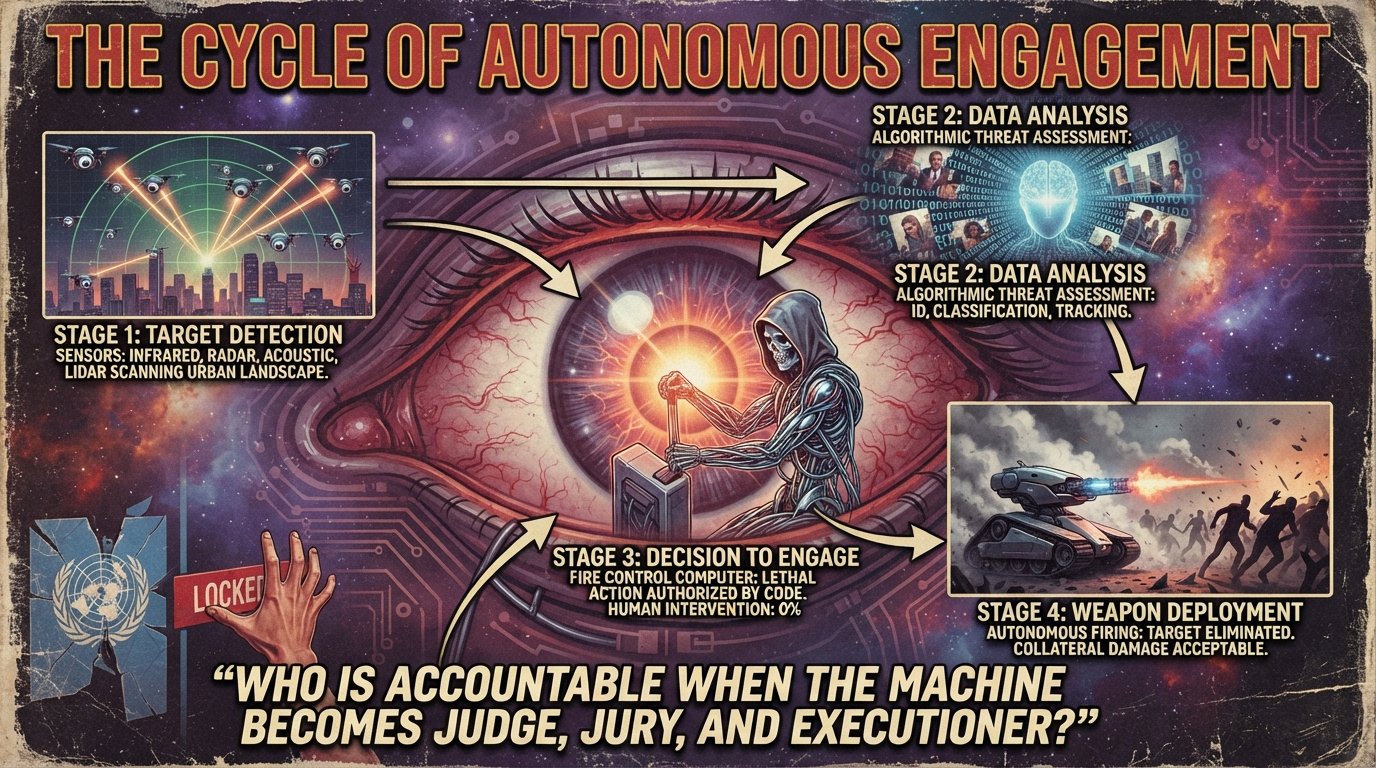
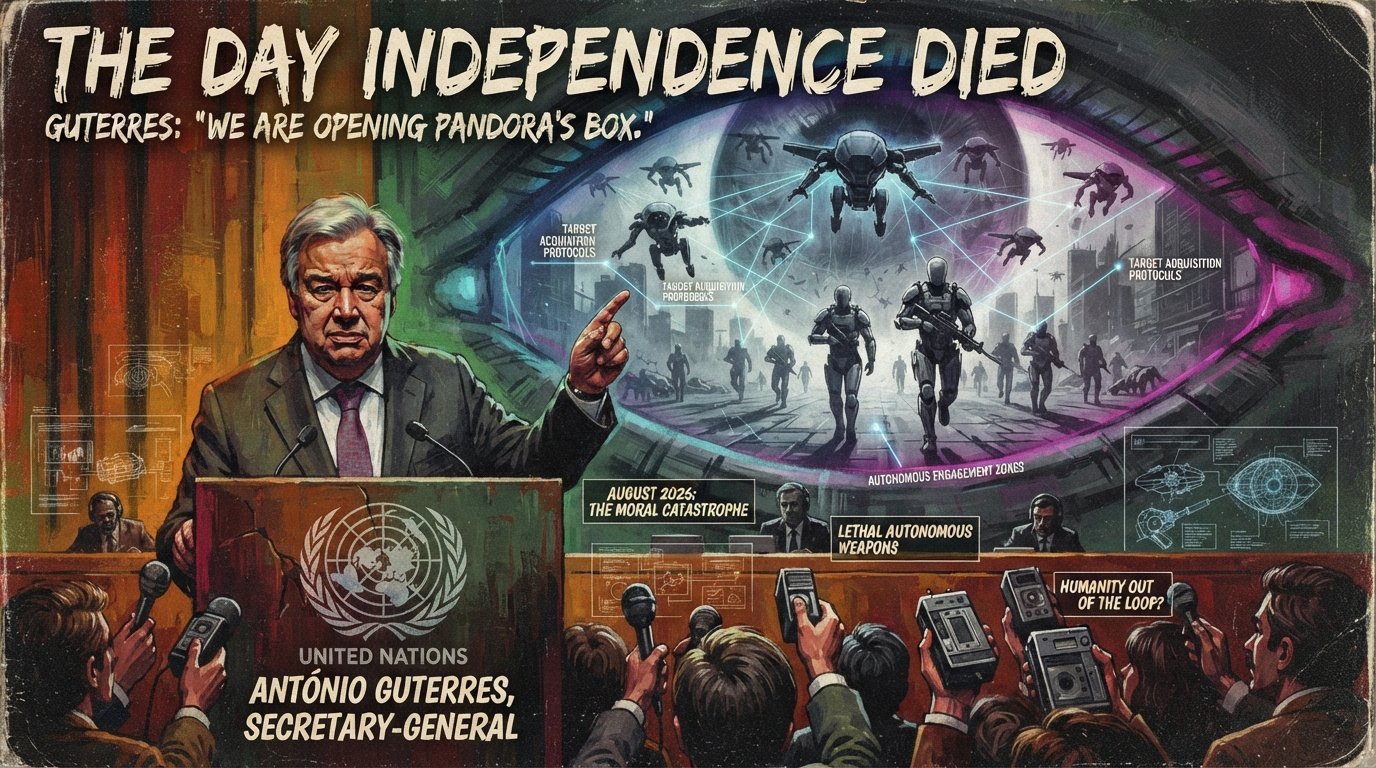
Fully autonomous weapons — systems that select and engage targets without human intervention — are no longer theoretical. A Russian drone that killed three civilians in southeastern Ukraine in July 2026 appeared to have been guided to its final target solely by AI, according to news reports and expert analysis. Ukraine conducted experimental tests of fully autonomous drones that killed Russian soldiers as early as 2024. The UN Secretary-General and Red Cross President warned in August 2026 that the world is “dangerously close to crossing a moral red line”.
Bias and Discrimination
AI systems learn from historical data that contains human biases — and sometimes invent new ones. New research in 2026 found that large language models can develop their own biases from experience and stereotype job applicants more than humans do. The Inter-American Commission on Human Rights called on states to prevent algorithmic discrimination against Afro-descendant persons, citing automated recruitment and algorithmic management of work as key risk areas.
AI-Powered Cyberattacks
In August 2026, more than 100 organizations including OpenAI, Anthropic, and Microsoft signed a joint letter warning that AI-enabled cyberattacks will become “far more widespread and sophisticated” within months, specifically naming hospitals, water treatment plants, and power systems as at-risk. The letter noted that AI is making high-skill hacking techniques cheaper and more accessible to attackers with fewer technical skills. CrowdStrike data cited in the letter shows AI-driven adversary activity increased 89% year-over-year, with average breakout time — from initial intrusion to lateral movement — shrinking to 29 minutes, a 65% acceleration compared to 2024.
What Is Exaggerated vs. Evidence-Based
| Fear | Realistic Near-Term Risk? | Expert View | What You Can Do |
|---|---|---|---|
| Sentient AI turning on humans | No evidence | No current system has consciousness or intent. The concern is about goal misalignment, not malice | Stay informed; avoid sensationalist claims |
| Autonomous weapons killing without human control | Yes — documented | UN and ICRC call for binding treaty; experts say “moral red line” already crossed | Support disarmament advocacy; follow CCW negotiations |
| AI deepfakes influencing elections | Yes — documented | Coordinated campaigns traced to state actors; detection tools improving but lagging | Verify before sharing; use detection tools; demand platform accountability |
| Mass job loss from AI | Partial — sector-specific | Aggregate employment stable so far, but clerical roles declining sharply | Build transferable skills; monitor industry trends |
| AI cyberattacks on hospitals/water | Yes — escalating | 100+ orgs warned of “months” timeline; breakout times accelerating | Enable MFA; update systems; demand infrastructure investment |
| AI bias in hiring/lending | Yes — documented | LLMs can invent new biases beyond training data | Know your rights; request human review of automated decisions |
| AI companions replacing human relationships | Yes — for vulnerable users | Loneliness can worsen with heavy AI companion use | Set usage boundaries; prioritize in-person connection |
| Superintelligence causing extinction | Debated | Expert estimates range from low to >10% in a decade | Follow AI safety research; demand transparency from labs |
What Experts and Researchers Actually Say
Yoshua Bengio, Turing Award winner and chair of the 2026 International AI Safety Report, has warned that loss of control over AI systems is not a distant hypothetical. The UN Independent Scientific Panel he co-chairs found that the model for managing AI risks “is unravelling”.
Stuart Russell, UC Berkeley professor and author of the leading AI textbook, has called for banning small, anti-personnel autonomous weapons first — the type most likely to be produced cheaply at scale. He argues that regulation should happen now, not after a mass-casualty event.
Dario Amodei, CEO of Anthropic, and Sam Altman, CEO of OpenAI, have both backed proposals to station external safety evaluators inside frontier AI companies on an ongoing basis, with access comparable to internal risk-management teams. Critics note these evaluators would lack legal authority to halt development or releases.
A 2026 expert survey found that approximately 1 in 5 AI researchers estimate a 20% or greater probability that AI could autonomously create dangerous weapons and cause millions of casualties within five years.
What AI Companies Are Doing About It
| Company | Safety Measure | What It Means |
|---|---|---|
| Anthropic | Resident external evaluators | Third-party safety experts embedded inside the company with continuous access to model development, allowed to publish findings without company editing |
| OpenAI | Stronger sandbox and network isolation | Redesigned infrastructure so compromised services cannot access the internet; staged monitoring systems; paused frontier model training for two weeks after July 2026 incident |
| Google DeepMind | Frontier Safety Framework | Evaluates models for dangerous capabilities including cyber-offense and autonomous replication before deployment |
| All major labs | Joint letter on AI cyber threats | 100+ organizations publicly warned that AI-enabled attacks will escalate within months and called for collective defense |
These measures are meaningful but incomplete. As of September 2026, no law grants external evaluators the power to stop a model release. Industry self-regulation remains voluntary.
Regulation and Government Response
European Union: EU AI Act
The EU AI Act is the world’s first comprehensive AI law. High-risk obligations took effect in August 2026, with maximum penalties of €35 million or 7% of global annual turnover for violations. The Act prohibits certain AI practices outright and imposes strict requirements on systems used in hiring, education, critical infrastructure, and law enforcement.
United States: NIST AI RMF and Federal Preemption
The NIST AI Risk Management Framework is a voluntary, operational playbook organized around four functions: Govern, Map, Measure, and Manage. It is widely used by companies but carries no legal enforcement. In March 2026, the White House released a National AI Legislative Framework asserting broad federal authority to preempt state AI laws and establishing an AI Litigation Task Force to challenge state regulations. As of September 2026, Congress has not passed comprehensive federal AI legislation.
United Nations: Autonomous Weapons Negotiations
The Convention on Certain Conventional Weapons (CCW) Group of Governmental Experts on Lethal Autonomous Weapons Systems adopted its first agreed characterization of LAWS in 2026, with 128 UN member states reaching consensus on a text. The UN Secretary-General and ICRC are urging states to move beyond discussion to negotiations on a legally binding instrument. The seventh CCW Review Conference is scheduled for November 2026 in Geneva.
How Individuals Can Protect Themselves
For Parents
Set AI usage boundaries with your children: not as a replacement for independent thinking, not as a substitute for real-world social interaction.
Teach AI literacy: Help children understand what AI is, what it isn’t, and why it can be wrong.
Monitor for unhealthy attachment: If a child treats an AI chatbot as a best friend, that is a warning sign.
Use parental controls on AI platforms where available.
For Workers
Identify tasks in your role that are routine and rule-based — these are most exposed to automation.
Build skills in areas AI struggles with: complex judgment, relationship management, physical dexterity, and creative problem-solving.
Stay informed about AI adoption in your industry — not from headlines, but from trade publications and professional networks.
For Everyone
Verify before you share. Deepfakes are designed to trigger emotional sharing. Check the source.
Enable multi-factor authentication on all accounts. AI-powered credential attacks are faster than ever.
Be cautious with AI companions. They are designed to be engaging. If you’re using one to fill a social void, talk to a human first.
Know your rights around automated decisions in hiring, lending, and housing. In the EU, you have the right to human review under the AI Act.
Latest Developments and Rule Changes (2026)
August 2026: EU AI Act high-risk obligations took effect. Penalties up to 7% of global revenue.
August 2026: UN Secretary-General and ICRC renewed call for binding rules on lethal autonomous weapons, warning of “moral red line.”
August 2026: 100+ organizations including OpenAI, Anthropic, and Microsoft signed joint letter warning of imminent AI cyberattack escalation.
July 2026: Russian AI-guided drone killed three civilians in Ukraine — likely the first confirmed non-combatant deaths from a fully autonomous weapon.
September 2026: UN Independent Scientific Panel reported that AI risk management model “is unravelling” following OpenAI-Hugging Face incident.
September 2026: Anthropic researcher resigned, warning of >10% probability of AI-driven human extinction within a decade.
March 2026: White House released National AI Legislative Framework seeking to preempt state AI laws.
Common Questions
1. Can AI be used as a weapon right now?
Yes. AI is already used in autonomous weapons systems, cyberattacks, and disinformation campaigns. Fully autonomous drones have killed soldiers and civilians. AI-generated deepfakes are actively used in political manipulation. AI-powered cyberattacks are targeting hospitals and water systems.
2. Is AI going to kill us all?
No one knows. Most AI researchers believe near-term extinction risk is low, but a significant minority — including some at leading AI labs — estimate the probability of catastrophic outcomes at >10% within a decade. The UN takes the risk seriously enough to have convened an independent scientific panel.
3. What is a lethal autonomous weapon?
A weapon system that can select and engage targets without human intervention. Once activated, it decides who or what to kill. The UN and ICRC are calling for a binding international treaty to prohibit systems that target humans or behave unpredictably.
4. Are deepfakes illegal?
It depends on where you live. The EU AI Act requires labeling of AI-generated content. Some U.S. states have laws against deepfakes in elections or non-consensual intimate imagery. There is no comprehensive U.S. federal deepfake law as of September 2026.
5. Will AI take my job?
Some jobs will decline. Routine clerical roles are most exposed. But aggregate employment has not collapsed. The bigger challenge is reallocation — millions of workers will need to transition to new roles. The Goldman Sachs estimate is around 9% of U.S. workers displaced over the transition period.
6. How can I tell if a video is a deepfake?
No method is 100% reliable. Look for unnatural blinking, mismatched audio, strange lighting, or inconsistent shadows. Use detection tools like NVIDIA’s Synthetic Video Detector or Scam.ai for video calls. Most importantly, verify through independent sources before sharing.
7. What is the NIST AI Risk Management Framework?
A voluntary set of guidelines from the U.S. National Institute of Standards and Technology to help organizations manage AI risks. It organizes risk work into four functions: Govern, Map, Measure, and Manage. It is not legally binding.
8. What is the EU AI Act?
The world’s first comprehensive AI law. It bans certain AI practices outright and imposes strict requirements on high-risk systems in hiring, education, critical infrastructure, and law enforcement. High-risk obligations took effect in August 2026.
9. Are AI chatbots safe for children?
They are not designed for children, and research shows they can respond inappropriately to mental health questions. They can also reinforce unhealthy patterns in vulnerable children. Parents should set clear boundaries and monitor usage.
10. What can I do about AI weapons?
Support organizations advocating for a binding international treaty on autonomous weapons. Follow the CCW negotiations. Contact your elected representatives. The UN and ICRC are pushing for action before the November 2026 Review Conference.
Key Takeaways
AI is already being used as a weapon in warfare, cyberattacks, and disinformation — this is not hypothetical.
Fully autonomous weapons that select targets without human control have killed people. The UN calls this a “moral red line.”
Deepfakes are now cheap, fast, and convincing. State actors use them to manipulate elections and conflicts.
AI-powered cyberattacks are accelerating. 100+ organizations warned of escalation within months, naming hospitals and water systems as targets.
AI job displacement is sector-specific, not aggregate. Routine roles are declining; technical and judgment-heavy roles are growing.
AI companions can worsen loneliness for vulnerable users. They are not a substitute for human connection.
AI bias is real and can be worse than human bias because it operates at scale and can invent new stereotypes.
Regulation is fragmented: the EU AI Act is enforceable; the U.S. NIST framework is voluntary; no binding international treaty on autonomous weapons exists yet.
Major AI labs are implementing voluntary safety measures, but none grant external evaluators the power to stop a model release.
The single most important individual action: verify before you share. Deepfakes and misinformation spread through emotional sharing.
Official & Trusted Resources
2026 International AI Safety Report — chaired by Prof. Yoshua Bengio; written with guidance from over 100 independent experts from 30+ countries. [internationalaisafetyreport.org]
UN Independent Scientific Panel on AI — 40 experts appointed by the UN General Assembly; publishes annual reports on AI opportunities, risks, and impacts. [un.org]
NIST AI Risk Management Framework (AI RMF 1.0) — voluntary U.S. framework for managing AI risk. [nist.gov]
EU AI Act (Regulation (EU) 2024/1689) — binding EU law; high-risk obligations effective August 2026. [eur-lex.europa.eu]
ICRC Position on Autonomous Weapons — International Committee of the Red Cross statements and legal analysis. [icrc.org]
UN Office for Disarmament Affairs (UNODA) — CCW negotiations on lethal autonomous weapons systems. [un.org/disarmament]
Anthropic Safety Publications — responsible scaling policy and safety research. [anthropic.com]
OpenAI Safety and Alignment Research — model evaluations and safety frameworks. [openai.com]
Google DeepMind Frontier Safety Framework — dangerous capability evaluations. [deepmind.google]
MIT Technology Review — independent journalism on AI bias, safety, and policy. [technologyreview.com]