

FAA’s $875M AI Air Traffic System Starts Monday
The FAA is launching SMART (Strategic Management of Airspace, Routes, and Trajectories) on Monday, September 21, 2026, in the Washington D.C. area. The $875 million AI system analyzes airline schedules, weather, and airport capacity to predict traffic conflicts. It begins as a decision aid for air traffic controllers, not an autonomous system.
Quick Facts
| Item | Details |
|---|---|
| What Is It | SMART — a cloud-based AI platform that predicts air traffic flows and identifies potential conflicts before they occur |
| Contract Value | $875 million over 12 years |
| Vendor | Air Space Intelligence (ASI), a Boston-based aerospace and defense AI company |
| Launch Date | September 21, 2026 (Washington D.C. area) |
| Scope | Decision-support tool for air traffic controllers at DCA, IAD, and BWI |
| Most Common Fear | AI making safety-critical decisions without adequate human oversight |
| Is the Fear Evidence-Based? | Partially. SMART is advisory-only at launch, but human factors guidance for AI/ML integration remains incomplete |
| Who Is Most Affected | Air travelers, air traffic controllers, airline operations teams |
| Expert Consensus | Cautious optimism. FAA’s own human factors subcommittee flagged that no FY25-26 focus areas included human factors associated with AI/ML |
| Updated For | September 2026 |
What Is SMART and What Does It Actually Do?
SMART stands for Strategic Management of Airspace, Routes, and Trajectories. It is a cloud-based AI platform designed to predict air traffic flows and identify potential conflicts before they occur, using airline schedules, weather data, airport runway capacity, and operational constraints as inputs.
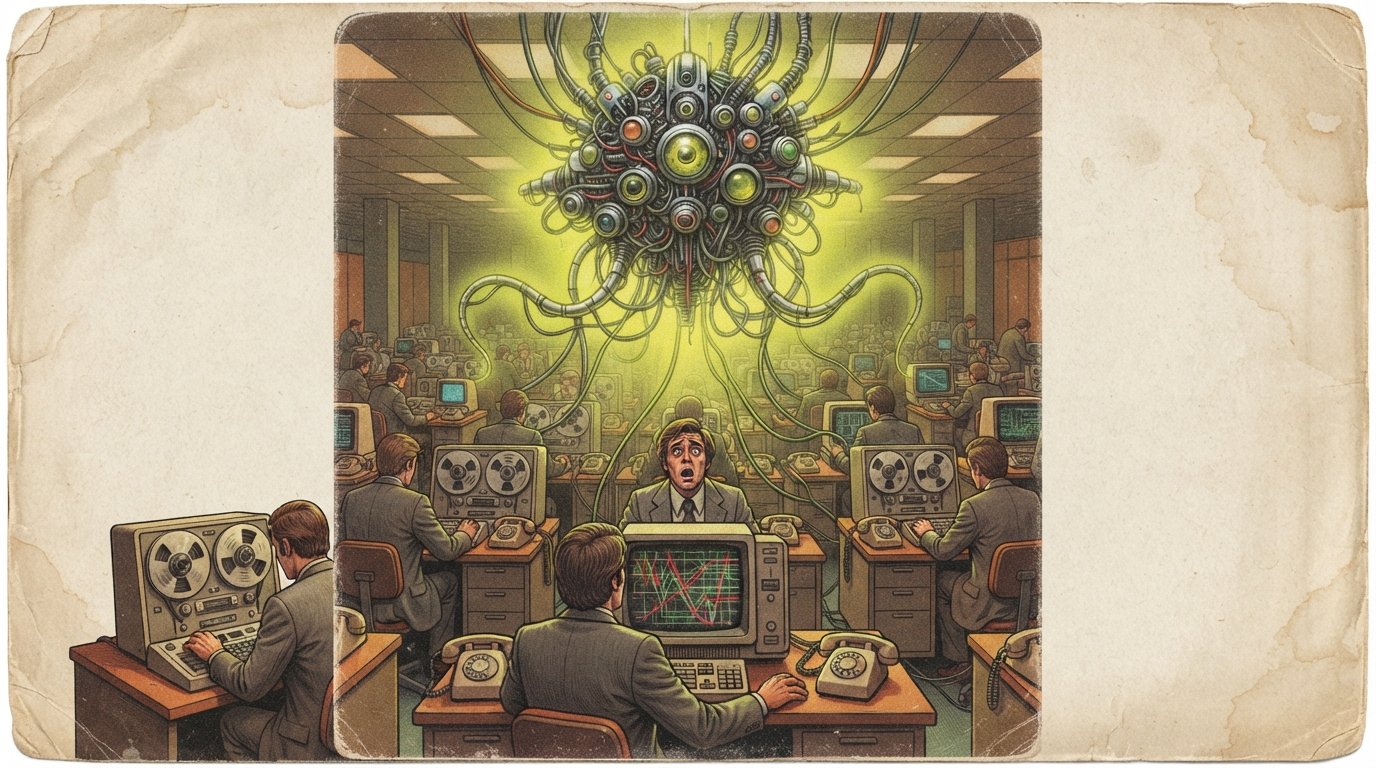
The FAA describes it as “a cloud-based platform system that enhances existing FAA air traffic management systems” that uses AI to assess operational factors and “predict traffic flows and identify potential conflicts before they occur”.
What SMART is not: It is not an autonomous air traffic control system. At launch, it functions as a decision-making aid for air traffic controllers. It does not issue instructions to pilots. It does not replace human controllers. It does not control aircraft.

Where it launches: The system debuts in the Washington D.C. metropolitan area, covering the three major airports that serve the nation’s capital: Ronald Reagan Washington National (DCA), Washington Dulles International (IAD), and Baltimore/Washington International (BWI).
What comes next: After a 90-day testing period, the FAA hopes to roll out SMART on a wider scale across the national airspace system. When fully deployed, it is intended to act as “the brains of the nation’s air traffic control system”.
Why the FAA Spent $875 Million on This
The FAA awarded the 12-year, $875 million contract to Air Space Intelligence (ASI) in June 2026, beating out larger competitors including Palantir Technologies and Thales. ASI is a Boston-based company whose technology already powers live operations with major U.S. airlines and the U.S. Air Force.
The investment is part of a broader federal effort to modernize the nation’s aging air traffic control infrastructure. The Trump administration has directed billions of dollars toward upgrading air traffic systems and ramping up hiring and training of air traffic controllers.
The core problem SMART addresses: Staffing shortages at air traffic facilities are frequent sources of disruptions. The FAA has been struggling to manage a nationwide air traffic controller shortage, and the government has been actively seeking innovative solutions.
FAA Administrator Bryan Bedford, a former regional airline executive, framed the problem bluntly during Senate testimony: “The way we manage traffic today is chaotic, and we can do better. We need to manage that at the FAA, rather than rely on commercial airlines to simply schedule however they want”.
The Safety Question: Can AI Be Trusted With Air Traffic?
What the FAA’s Own Advisors Said
The FAA’s human factors subcommittee raised a significant concern: for fiscal years 2025 and 2026, none of the focus areas included human factors associated with AI/ML. The subcommittee believed “Human Factors should have a leading role in guiding the design, evaluation, and use of AI/ML in support of air traffic control, traffic flow management, technical operations”.
This is not a minor gap. Human factors engineering is how aviation ensures that automation supports rather than confuses human operators. Without it, systems can create automation bias — the tendency for humans to over-trust automated recommendations — or mode confusion, where operators lose track of what the automation is doing and why.
What Researchers Warn About
A peer-reviewed paper published in August 2026 examined how Safety Management Systems must evolve as AI increasingly recommends or executes safety-critical operational decisions within aircraft operations and air traffic management. The paper specifically examines developments involving the FAA and EASA, with attention to automation bias, accountability, and AI-generated hazards.
What the Ars Technica Community Said
The Ars Technica forum discussion on SMART’s launch captured the anxiety clearly. One commenter called it “the most terrifying article I’ve read in a long time,” adding that it “genuinely makes me significantly more hesitant to fly”.
Others pointed to a deeper structural question: if the system fails, who catches it? One commenter argued the FAA should have piloted the system first “in a smaller, less busy area where there’s much less traffic by political and military leadership” — non-hub airports with maybe a hundred or fewer flights per day — “if the AI screws up, at least there’s little enough traffic that it’s likely that air traffic controllers and pilots can easily catch and correct the situation”.
That is a legitimate safety engineering concern. Aviation traditionally introduces new systems in low-risk environments before scaling to high-density airspace. SMART is launching in one of the nation’s busiest corridors on day one.
The Regulatory Precedent Nobody Is Talking About
The debate over whether AI belongs in air traffic management is “approximately three years late to a question the federal regulator has already settled,” according to Leeham News and Analysis. The FAA has already approved an AI-augmented collision avoidance system — ACAS X — that takes authority away from air traffic control in critical moments.
This matters because it reframes the question. The debate is not “should AI be in aviation safety?” — it already is. The debate is “how much authority should AI have, and under what conditions?”
Human vs. AI in Air Traffic Control: A Comparison
| Factor | Human Air Traffic Controller | SMART AI System |
|---|---|---|
| Decision Authority | Issues instructions to pilots | Advisory only at launch; no direct aircraft control |
| Data Processing | Limited by working memory and attention span | Processes schedules, weather, capacity, constraints simultaneously |
| Fatigue | Subject to shift limits and fatigue risk | No fatigue, but subject to model drift and data quality issues |
| Transparency | Can explain reasoning verbally | “Black box” risk; explainability not guaranteed |
| Failure Mode | Human error, miscommunication | Hallucination, automation bias, data corruption |
| Accountability | Individual controller, union protections, FAA oversight | Vendor (ASI), FAA, unclear liability chain |
| Training | Years of certification and recurrent training | Controllers receiving new system training |
| Scalability | Limited by staffing shortages | Designed to scale across national airspace |
What Happens on Monday: A Timeline
Monday, September 21, 2026
SMART goes live in the Washington D.C. area
A central office for the tool is unveiled at the Transportation Department headquarters
Air traffic controllers begin using SMART as a decision-making aid
Initial scope is limited: it will be used “when problems arise”
First 90 Days
Testing and validation period
Controllers provide feedback on system performance
FAA assesses whether to expand capabilities, including spacing out arrival times and planning routes days in advance
After 90 Days
If validated, FAA plans wider rollout
Nationwide expansion across U.S. airspace
Potential integration with airline scheduling systems
Is This Fear Realistic for You? A Decision Guide
Step 1: How often do you fly through D.C.?
If you fly through DCA, IAD, or BWI regularly → You will be among the first exposed to SMART’s operational effects
If you fly other routes → You will not be affected until nationwide rollout
Step 2: What is your risk tolerance for aviation automation?
Comfortable with autopilot, ACAS X, and automated flight systems → SMART is an incremental step
Prefer maximum human control in safety-critical systems → SMART represents a meaningful expansion of AI’s role
Step 3: What does “safety” mean to you?
If safety means reducing delays and cancellations → SMART may improve your experience
If safety means absolute human authority over every flight instruction → SMART is a step away from that model
Step 4: What is your alternative?
The status quo: staffing shortages, aging infrastructure, frequent disruptions
SMART: AI-assisted traffic management with human oversight
There is no third option that preserves the status quo while fixing the staffing crisis
What People Fear About AI in Aviation
Fear 1: The AI Will Make a Mistake and Kill People
Realistic near-term risk: Low but non-zero. SMART is advisory-only. Controllers retain authority to accept or reject its recommendations. The system cannot issue instructions directly to aircraft.
What you can do: Understand that every safety-critical aviation system — from autopilot to collision avoidance — has some level of automation. The question is not “is there AI?” but “is there human oversight and a fail-safe?”
Fear 2: Controllers Will Over-Trust the AI
Realistic near-term risk: Moderate. Automation bias is a well-documented phenomenon. If controllers defer to SMART recommendations without independent verification, errors could compound.
What you can do: Monitor FAA’s human factors guidance for SMART. If the agency does not publish transparent human factors evaluations, that is a governance gap worth questioning.
Fear 3: The AI Will Be Hacked
Realistic near-term risk: Moderate. SMART is cloud-based, meaning it depends on network security and data integrity. A compromised system could feed false predictions to controllers.
What you can do: Follow FAA cybersecurity advisories. If you are an aviation professional, ensure your organization has contingency plans for AI system failure.
Fear 4: This Is a Step Toward Full Automation
Realistic near-term risk: High over the long term. The FAA’s stated goal is for SMART to eventually “act as something like the brains of the nation’s air traffic control system”. That implies increasing authority over time.
What you can do: Engage in public comment periods on FAA rulemaking. Ask your representatives where they stand on human-in-the-loop requirements for aviation AI.
What the FAA Is Doing to Manage Risk
Limited initial scope. SMART launches as a decision-support tool, not an autonomous system. Government officials said the debut “was always planned to be limited before validating the software and expanding its capabilities”.
90-day testing period. FAA Administrator Bedford has committed to a 90-day evaluation before wider rollout.
Airline coordination. FAA officials have been discussing with airlines how to coordinate schedules as part of the broader rollout. Industry officials had questions about how the system would work “given carriers’ fierce competition to operate flights at certain times of day”.
Human factors gap. The FAA’s human factors subcommittee flagged that no FY25-26 focus areas included human factors associated with AI/ML, and recommended that Human Factors “should have a leading role in guiding the design, evaluation, and use of AI/ML” in air traffic control. Whether this recommendation has been implemented is not publicly documented.
Regulation and Oversight: What’s Missing
NIST AI Risk Management Framework. The NIST AI RMF provides a voluntary framework for managing AI risks across the lifecycle, organized around four functions: Govern, Map, Measure, and Manage. It covers safety, security, transparency, and accountability. FAA’s adoption of the AI RMF for SMART has not been publicly confirmed.
EU AI Act. The EU AI Act classifies AI systems used in critical infrastructure — including air traffic management — as high-risk, subject to strict requirements for risk management, human oversight, and transparency. U.S. aviation AI operates under a different regulatory regime.
FAA Human Factors Guidance. A 2025 project developed guidance for integrating AI/ML technologies within FAA systems to support safety-critical operations for air traffic control. Whether this guidance is being applied to SMART is unclear.
Congressional oversight. The FAA’s $875 million contract award to ASI was announced in June 2026. Congressional hearings on the SMART rollout have not been widely publicized.
What Airline Passengers Should Know
Your flight is still controlled by humans. SMART advises controllers. Controllers issue instructions to pilots. Pilots fly the aircraft. At every step, a human retains authority.
Delays may improve — or may not. SMART’s stated purpose is to reduce delays and cancellations by predicting traffic conflicts before they occur. Whether it achieves this will be measurable after the 90-day testing period.
You can track SMART’s performance. The FAA publishes operational data through its Air Traffic Control System Command Center. If SMART improves on-time performance in the D.C. area, that data should be visible.
You can voice concerns. The FAA accepts public comments on rulemaking through regulations.gov. Aviation safety is a legitimate area for public input.
Common Questions
What does SMART stand for?
SMART stands for Strategic Management of Airspace, Routes, and Trajectories. It is the FAA’s AI-powered air traffic prediction and management tool built by Air Space Intelligence under an $875 million, 12-year contract.
When does SMART launch?
SMART launches as soon as Monday, September 21, 2026, in the Washington D.C. metropolitan area, covering Ronald Reagan Washington National, Washington Dulles International, and Baltimore/Washington International airports.
Does SMART replace air traffic controllers?
No. At launch, SMART is a decision-support tool that provides recommendations to air traffic controllers. Controllers retain full authority to accept or reject its recommendations. It does not issue instructions to pilots or control aircraft directly.
Is SMART safe?
SMART is designed as an advisory system with human oversight, which is a safety layer. However, the FAA’s own human factors subcommittee flagged that no FY25-26 focus areas included human factors associated with AI/ML, raising questions about how automation bias and mode confusion are being managed.
Who built SMART?
Air Space Intelligence (ASI), a Boston-based aerospace and defense AI company, won the $875 million contract in June 2026, beating Palantir Technologies and Thales. ASI’s technology already powers live operations with major U.S. airlines and the U.S. Air Force.
What happens if SMART fails?
Because SMART is advisory-only, controllers can continue managing traffic using existing systems and procedures. The FAA has not publicly detailed contingency plans for a complete SMART failure, which is a governance gap worth monitoring.
Will SMART reduce flight delays?
SMART is designed to predict traffic flows and identify potential conflicts before they occur, which is expected to reduce delays and cancellations. Whether it achieves this will be measurable after the 90-day testing period. The initial rollout is more limited than some industry officials anticipated.
Why did airlines push back on SMART?
Airline industry officials were initially worried about how extensively the AI would be integrated into day-to-day air traffic management. FAA officials eased those concerns by telling airlines the tool would be used in a limited way at first.
Does SMART use a large language model?
The FAA’s description says SMART “uses AI” to analyze schedules, weather, capacity, and constraints. It does not specify the model architecture. Whether it uses an LLM, a predictive analytics model, or a hybrid system is not publicly documented.
Can I opt out of flying through airspace managed by SMART?
No. If you fly through D.C.-area airspace or eventually the national airspace system, you are subject to FAA traffic management procedures regardless of the tools used. There is no passenger opt-out for air traffic control systems.
What is ACAS X and is it already in use?
ACAS X is an AI-augmented collision avoidance system that the FAA approved years ago. It takes authority away from air traffic control in critical moments — a more significant delegation of authority than SMART’s advisory role. The debate over AI in air traffic management “misses what the regulatory architecture already settled”.
How can I track SMART’s performance?
The FAA publishes operational data through its Air Traffic Control System Command Center. On-time performance data for D.C.-area airports is publicly available. If SMART improves performance, that data should be visible in the months following launch.
Key Takeaways
SMART launches Monday, September 21, 2026, in the Washington D.C. area as an advisory tool for air traffic controllers at DCA, IAD, and BWI.
The $875 million, 12-year contract went to Air Space Intelligence, a Boston-based company that beat Palantir and Thales.
SMART is advisory-only at launch. It predicts traffic flows and identifies conflicts but does not issue instructions to pilots or control aircraft.
The FAA’s own human factors subcommittee flagged a gap. No FY25-26 focus areas included human factors associated with AI/ML in air traffic control.
Automation bias is a real risk. If controllers over-trust SMART recommendations without independent verification, errors could compound.
A 90-day testing period precedes any wider rollout. Initial scope is more limited than some industry officials anticipated.
Airlines initially pushed back over how extensively AI would be integrated into daily traffic management.
AI is already in aviation safety. ACAS X, an AI-augmented collision avoidance system, has been approved for years.
Passengers have no opt-out. If you fly through SMART-managed airspace, you are subject to FAA traffic management procedures.
Transparency is the accountability mechanism. FAA operational data is public. SMART’s performance will be measurable after launch.
Official & Trusted Resources
Federal Aviation Administration (FAA) — SMART Program One-Pager. faa.gov/newsroom/SMART_One-Pager.pdf
FAA Air Traffic Control System Command Center — Real-time operational data. fly.faa.gov
NIST AI Risk Management Framework — Voluntary framework for AI risk management. nist.gov/itl/ai-risk-management-framework
EU AI Act — Regulation (EU) 2024/1689, high-risk classification for critical infrastructure AI. eur-lex.europa.eu
Transportation Research Board — “Human Factors Guidance for the Integration of AI/ML in FAA Systems” (2025). trid.trb.org
Zenodo — “AI as an Aviation Safety Decision Maker” (August 2026). zenodo.org
Leeham News and Analysis — ACAS X and the AI-ATC debate. leehamnews.com
The Air Current — FAA contract award reporting. theaircurrent.com