
Are Smart Speakers Secretly Recording You for AI?
Smart speakers are not constantly recording and transmitting your conversations. They listen locally for a wake word like “Alexa” or “Hey Google.” However, accidental activations are common, recordings are stored by default, human reviewers have listened to clips, and Amazon’s 2025 Alexa+ update removed the option to keep voice data off the cloud entirely.
Quick Facts
| Item | Details |
|---|---|
| Most Common Fear | Smart speakers secretly recording private conversations and sending them to tech companies for advertising or AI training |
| Who Is Most Affected | Households with smart speakers, especially those with children; people who discuss sensitive information near devices |
| Is the Fear Evidence-Based? | Partially. Devices do not record continuously, but accidental activations happen, recordings are retained by default, and documented cases of human review exist |
| Expert Consensus | Smart speakers listen for wake words locally, but false activations, indefinite data retention, and cloud processing create real privacy risks that users often underestimate |
| Related Research | UCL misactivation study (2025); IEEE Privacy-by-Design audit (2026); Garner v. Amazon class action (ongoing); Google Assistant $68M settlement (2026); Apple Siri $95M settlement (2025) |
| Where to Learn More | Amazon Alexa Privacy Hub, Google My Activity, Apple Siri & Privacy, NIST Smart Speaker Guidelines, FTC COPPA enforcement actions |
| Updated For | September 2026 |
The Short Answer: What Smart Speakers Actually Do
Smart speakers are always listening, but only for a specific wake word. That distinction matters.

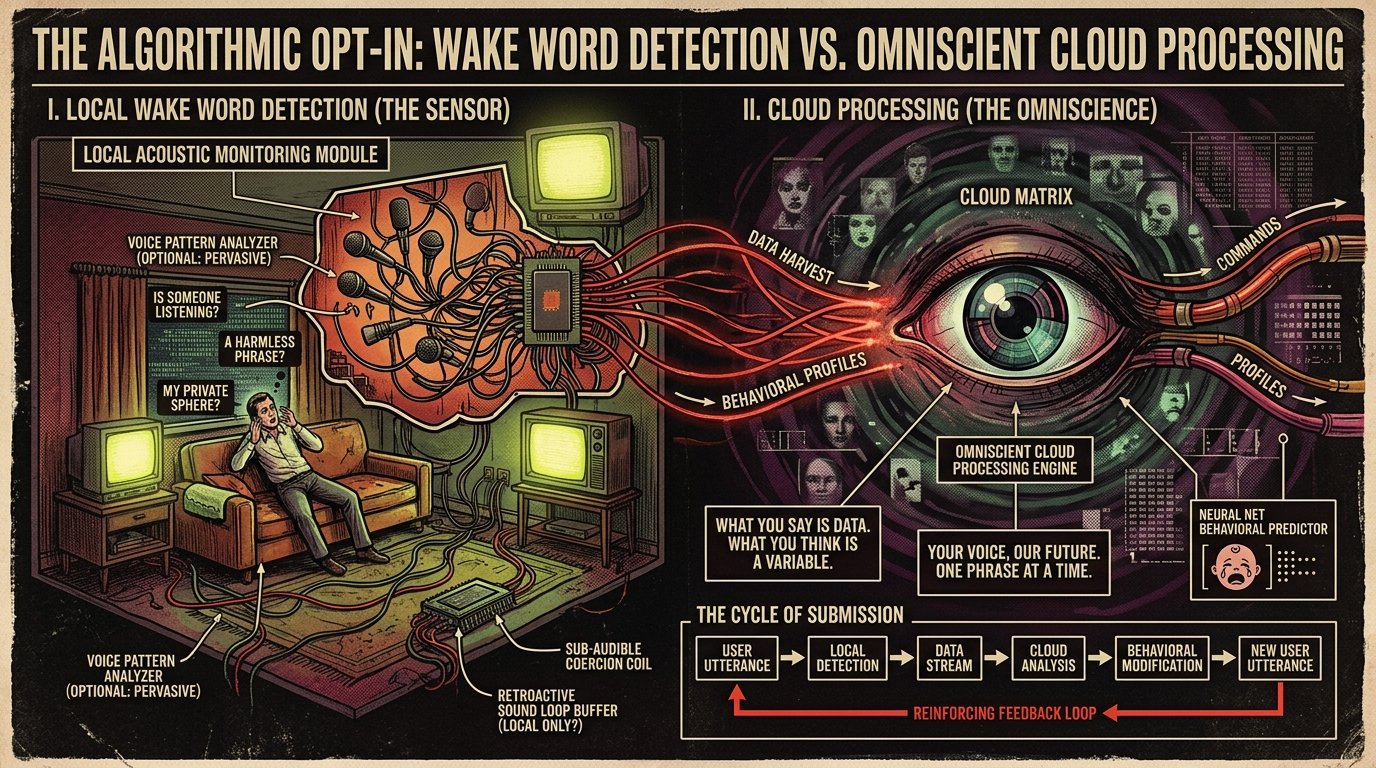
Every major smart speaker — Amazon Echo, Google Nest, Apple HomePod — has a microphone that stays on continuously. The device runs a low-power, on-device process that listens for an acoustic pattern matching its wake word: “Alexa,” “Hey Google,” or “Siri.”
The device does not stream audio to the cloud until it detects the wake word. Until that moment, audio is processed locally and discarded. Amazon states: “By default, Alexa-enabled devices are designed to detect only your chosen wake word (e.g., Alexa, Amazon, Computer, Echo, or Ziggy)”.

However, three things complicate this simple picture:
Accidental activations are common. A study from University College London found 0.95 misactivations per hour — meaning roughly one false trigger every hour in a typical household — with some devices recording at least 10 seconds of audio during those events.
Recordings are stored by default. Once a wake word triggers recording, the audio is sent to the cloud, transcribed, and retained. Amazon retains voice recordings indefinitely by default unless the user changes settings.
The “do not send” option no longer exists on Amazon. As of March 28, 2025, Amazon eliminated the “Do Not Send Voice Recordings” feature. All Echo audio now goes to Amazon’s cloud servers for processing, even if you choose not to save it long-term.
What Data Smart Speakers Actually Collect
Every major smart assistant collects far more than voice commands. The data categories include:
Voice recordings: Audio clips of commands and accidental activations, stored on company servers
Transcripts: Text versions of what was said, searchable and reviewable
Usage patterns: What you ask, when you ask it, how often
Smart home data: Which devices you control, when, and your daily routines
Location data: Your home address and sometimes current location
Household profiles: Distinct voice profiles for different family members
Third-party access: Skills and integrations that may receive your transcripts
A 2026 IEEE privacy audit of Google Home, Alexa, and Siri found that while Google Home achieved the highest usability score, Alexa “demonstrated clearer task navigation but weaker transparency in data retention”. The study concluded that “although youth may feel capable of managing their data, their privacy self-efficacy remains limited by technical design, complex settings, and unclear data policies”.
The False Activation Problem: When “Alexa” Hears Something Else
False activations — also called “false wakes” — occur when a smart speaker misinterprets a sound as its wake word and begins recording. This is not a hypothetical risk. It is a documented, measurable phenomenon.
How often does it happen? UCL researchers observed “0.95 misactivations per hour, or 1.43 times for every 10,000 words spoken, with some devices having 10% of their misactivation durations lasting at least 10 seconds”.
What triggers false activations? Common wake-word confusions include:
“Alexa” triggered by “a Lexus,” “election,” or similar-sounding words
“Hey Google” triggered by “a google” or background TV audio
“Siri” triggered by “seriously” or “sorry”
What happens to the audio? When a false activation occurs, the device records a short clip — typically a few seconds — and sends it to the cloud for processing. Even after the system determines the activation was accidental, the recording may be retained.
A Portland family discovered in 2018 that their private conversation had been recorded by Alexa and sent to a contact — without their knowledge — after the device misinterpreted their conversation as a sequence of commands.
Amazon has acknowledged false wakes occur. In the Garner v. Amazon class action, U.S. District Judge Robert Lasnik found that Amazon “has disclosed how and why the false wakes occur, such as in households that include people who happen to be named Alexa or drive a Lexus”. The judge dismissed Washington Consumer Protection Act claims but allowed federal wiretap claims related to false wakes to proceed.
The plaintiffs pointed to evidence suggesting Alexa devices “have encountered false wakes hundreds of millions of times since the devices were introduced”.
Can you prevent false activations? There is no guaranteed method. You can:
Change the wake word to a less common option (Amazon offers “Computer,” “Echo,” or “Ziggy”)
Mute the microphone when not in use
Physically unplug the device during sensitive conversations
Place speakers away from TVs and areas where conversations happen
Human Review: The Part Most Users Don’t Know
Human reviewers at Amazon, Google, and Apple have listened to voice recordings. This is not a conspiracy theory. It has been confirmed by company disclosures and investigative reporting.
Amazon employs people to review voice recordings “with the express intention of improving Alexa’s capacities: by reviewing the recording and how it was interpreted by Alexa, the employees can make corrections”. A 2026 analysis noted that “human reviewers at all major companies (Amazon, Google, Apple, Microsoft) have reviewed voice recordings to improve their AI”.
What the FTC found: FTC documents revealed “contractor access to sensitive recordings” and noted that “every Alexa, Google Home, and Siri conversation is captured, transcribed, stored indefinitely, and used to build behavioral profiles without meaningful consent”.
Can you opt out? Yes, but it varies:
Amazon: You can disable “Use voice recordings to improve new features” in Alexa Privacy settings. However, the “Do Not Send Voice Recordings” option was removed in March 2025.
Google: Audio recordings are not shared with human reviewers by default, and you can review and delete recordings at myactivity.google.com.
Apple: Apple does not retain Siri recordings unless you opt in to “Improve Siri & Dictation.” When cloud processing is needed, Apple uses privacy-preserving techniques and does not associate requests with your Apple ID by default.
A 2026 Yahoo Tech analysis explained the distinction clearly: “For HomePod and Google speakers, your voice recordings are not kept unless you have actively opted in… Both companies offer the option of allowing your recordings to be retained for training”. Amazon’s default, however, is retention.
Alexa+ and the Disappearing Privacy Option
In March 2025, Amazon made a significant privacy change that received less attention than it deserved. The company eliminated the “Do Not Send Voice Recordings” feature on all Echo devices, effective March 28, 2025.
What changed: Previously, Echo users could configure their devices to process voice commands locally without sending audio to Amazon’s cloud. That option no longer exists. All Alexa requests are now sent to Amazon’s cloud servers for processing, even if the user chooses not to save the recording long-term.
Why it matters: The “Do Not Send” feature was one of the strongest privacy protections available on a consumer smart speaker. Its removal means that every voice command — and every false activation — now goes through Amazon’s servers.
What Amazon says: Amazon stated that “the Alexa experience is designed to protect customers’ privacy and the security of their data, and that does not change”. Voice recordings are encrypted in transit and automatically deleted after processing unless users choose to keep them.
What users can still do: You can set recordings to auto-delete after 3 or 18 months, or choose “Don’t save recordings” in the Alexa app. But the audio still travels to Amazon’s cloud for processing. You cannot keep it on-device.
This change was tied to the launch of Alexa+, Amazon’s AI-powered subscription assistant, which requires cloud processing for its advanced capabilities. As one analysis put it: “Alexa devices will send all audio recordings to the cloud for processing, and choosing not to save these recordings will disable personalisation features”.
The “Active Listening” Scandal: What the FTC Found
In May 2026, the Federal Trade Commission announced that three marketing companies — Cox Media Group, MindSift LLC, and 1010 Digital Works — would pay nearly $1 million to settle allegations that they deceived businesses by claiming they could target ads based on audio recordings collected from smart devices.
The claim: Cox Media Group marketed a service called “Active Listening” that it said could collect consumers’ conversations from “smartphones, smart TVs, smart speakers and other devices” and use AI to target ads based on what people said. One website advertising the service included the slogan: “Creepy? Sure. Great for marketing? Definitely”.
The reality: The FTC alleged that “none of those things were true.” Instead, what CMG was offering was “nothing more than consumer email list buying” — lists it resold “at a significant markup over the cost of the data”.
The settlement: CMG agreed to pay $880,000, while MindSift and 1010 Digital Works each agreed to pay $25,000. The companies promised not to make misrepresentations about their marketing services or their collection and use of audio recordings.
Why this matters: The FTC’s complaints “don’t make allegations about whether it’s illegal to use audio recordings collected from people’s smart devices to target them with ads.” But the case demonstrates that companies have attempted to build businesses around the fear of always-listening devices — and that the technology to do so either doesn’t work as claimed or isn’t being used the way consumers fear.
The FTC’s action does not mean smart speakers are safe from ad-targeting. Google Home data is integrated with your Google account, which includes Search, Maps, YouTube, and Gmail. “Your smart home queries can influence ad targeting across all Google services”.
What the Lawsuits Reveal
The legal record provides the clearest evidence of what smart speakers actually do.
Google Assistant: $68 Million Settlement (2026)
Google agreed to pay $68 million in January 2026 to settle a class action lawsuit alleging that Google Assistant was activated without user consent and recorded private conversations, which were then sent to Google’s servers. The lawsuit focused on “false accepts” — unintentional activations of the microphones in Assistant devices including phones and Google Home speakers.
The settlement class includes “Google Assistant users or members of a household whose communications were allegedly recorded by Google Assistant due to a false activation”.
Apple Siri: $95 Million Settlement (2025)
Apple agreed to pay $95 million to settle a class action lawsuit accusing Siri of listening in on users’ private conversations without consent. Final approval was granted on October 16, 2025, with payments to millions of affected class members beginning in January 2026.
The litigation “addressed the intrusive recording of private conversations by Apple’s voice assistant Siri”.
Amazon: Ongoing Litigation (2021–Present)
The Garner v. Amazon class action, filed in 2021, accuses Amazon of deceptively failing to disclose that Alexa-enabled devices are susceptible to “false wakes” and record short bits of audio just before a wake word is spoken.
U.S. District Judge Robert Lasnik significantly narrowed the case in March 2026, dismissing Washington Consumer Protection Act claims and wiretap claims from three plaintiffs who had registered their devices. But he allowed wiretap claims from non-registrant plaintiffs — people who lived in a household with an Alexa device but did not register it themselves — to proceed under Florida and Maryland law, along with federal wiretap claims related to false wakes.
The plaintiffs alleged that “Amazon retains the snippets of audio even after confirming it wasn’t meant for Alexa and sometimes denies requests to delete the recordings”. The judge found that Amazon’s FAQ page has clearly disclosed data retention since at least 2019.
Children’s Privacy: $25 Million FTC Penalty (2023)
In May 2023, the FTC fined Amazon $25 million for violating the Children’s Online Privacy Protection Act (COPPA). The FTC’s complaint detailed that “Amazon retained children’s voice recordings indefinitely, even after parents submitted deletion requests”. Amazon kept the kids’ data to refine its voice recognition algorithm, the AI behind Alexa.
The COPPA rule requires verifiable parental consent before collecting personal information from children under 13. The FTC’s January 2025 COPPA rule amendments expanded the definition of personal information to include biometric identifiers like voiceprints, which smart speakers collect.
Comparison: What Each Company Actually Does
| Feature | Amazon Alexa | Google Assistant | Apple Siri |
|---|---|---|---|
| Always listening for wake word | Yes | Yes | Yes |
| Local wake word processing | Yes | Yes | Yes |
| Cloud processing required | Yes (all requests as of March 2025) | Yes (most requests) | Partial (on-device for basic tasks) |
| Default retention | Indefinite | 3 or 18 months (user choice) | Not retained unless opted in |
| Human review by default | Yes (can opt out) | No (not shared with reviewers) | No (not retained unless opted in) |
| Can disable cloud sending | No (removed March 2025) | No | N/A (processes locally) |
| Hardware mute | Yes (red ring) | Yes (orange light) | Yes (on HomePod) |
| Auto-delete options | 3 months, 18 months, or never save | 3 months, 18 months, or manual | Request deletion via Apple |
| Privacy score (IEEE 2026) | Weak transparency on retention | Highest usability | Highest regulatory compliance |
Is This Fear Realistic for You? A Decision Guide
Step 1: Do you have a smart speaker in your home?
Yes → Proceed to Step 2
No → You are not directly affected, but your guests may be if they visit homes with smart speakers
Step 2: Have you changed the default privacy settings?
No → Your recordings are retained indefinitely by Amazon or up to 18 months by Google
Yes, but only disabled training → Your recordings are still stored; training opt-out does not stop retention
Yes, set auto-delete → Recordings are deleted after your chosen period, but cloud processing still occurs
Step 3: Where is the device located?
Bedroom, bathroom, or home office → High risk of capturing sensitive conversations
Living room or kitchen → Moderate risk; false activations can capture family discussions
Near a TV or radio → Higher risk of false activations from media audio
Step 4: What would happen if your recordings were leaked or subpoenaed?
Nothing sensitive discussed → Low personal risk
Medical, legal, financial, or relationship discussions → High personal risk
Children’s voices captured → Regulatory protections apply, but enforcement is reactive
Step 5: What is your action plan?
If you accept the trade-off → Review recordings regularly and set auto-delete
If you are uncomfortable → Mute the microphone when not in use
If you are deeply concerned → Unplug the device during sensitive conversations or remove it from sensitive rooms
How to Protect Yourself: A Practical Checklist
Immediate steps:
Review your voice recordings. Open the Alexa app (Settings > Alexa Privacy > Review Voice History) or Google My Activity (myactivity.google.com > Voice & Audio). You will likely find recordings you did not know existed.
Set auto-delete. Amazon: Settings > Alexa Privacy > Manage Your Alexa Data > Choose how long to save recordings. Google: myactivity.google.com > Auto-delete > choose 3 or 18 months.
Disable human review. Amazon: Settings > Alexa Privacy > Help improve Amazon services > Off. Google: Audio recordings are not shared with human reviewers by default, but confirm in your settings.
Disable voice purchasing. This prevents accidental orders and reduces the risk of financial data exposure.
Review third-party skills. Skills and integrations may have access to your transcripts. Remove any you do not actively use.
Ongoing habits:
Use the hardware mute button during sensitive conversations. This physically disconnects the microphone and cannot be overridden by software.
Change the wake word to something less likely to be triggered accidentally. Amazon offers “Computer,” “Echo,” or “Ziggy.”
Place devices thoughtfully. Avoid bedrooms, bathrooms, and home offices where confidential conversations happen.
Delete unused recordings regularly. Even with auto-delete set, manual review helps you understand what has been captured.
Consider alternatives for sensitive discussions. For therapy, legal advice, medical consultations, or financial planning, do not rely on a smart speaker — even with the microphone muted.
Regulation and Government Response
United States
FTC enforcement. The FTC has been active in smart speaker privacy enforcement. The $25 million COPPA penalty against Amazon in 2023 established that children’s voice recordings are protected personal information. The January 2025 COPPA rule amendments expanded protections to include biometric identifiers like voiceprints, with per-violation fines now reaching $51,744.
State lawsuits. Texas sued Google for $1.4 billion over privacy violations, including smart speaker data practices. Google settled the case in 2025.
Congressional interest. Senators have raised concerns about “toys that use AI chatbots, that are marketed to young children, that are connected to the internet and that are equipped with speakers and microphones,” including data privacy protections under COPPA.
European Union
EU AI Act Article 50. Starting August 2, 2026, voice assistants in the EU are legally required to inform users they are interacting with AI. Article 50 imposes transparency obligations on “chatbots, voice assistants, AI companions and agentic systems,” requiring that users be informed of the AI origin “no later than at first contact”.
The guidelines explicitly cover voice assistants: “Providers must design interactive AI systems — chatbots, voice assistants, AI companions, agentic systems, and humanoid robots — so that natural persons are informed of the AI origin no later than at first contact through multimodal, accessibility-adapted disclosures”.
GDPR. The EU’s General Data Protection Regulation requires a legal basis for processing voice data, transparency about data use, and the right to erasure. The unlimited default retention periods set by Alexa and Google Assistant have been criticized as “against the concept of privacy by default (GDPR Art. 25)”.
NIST Guidelines
NIST published guidelines in December 2025 for securing smart speakers in home health care settings, drawing on the NIST Cybersecurity Framework 2.0, NIST Privacy Framework 1.0, and the Profile of the IoT Core Baseline for Consumer IoT Products. The guidelines address “privacy and cybersecurity risks found in HaH deployments when using smart speakers as a representative IoT device” and recommend controls including access control, authentication, continuous monitoring, data security, and governance.
Latest Developments and Rule Changes
March 28, 2025: Amazon eliminated the “Do Not Send Voice Recordings” feature on all Echo devices. All audio now goes to Amazon’s cloud for processing.
October 16, 2025: Apple’s $95 million Siri settlement received final approval. Payments to class members began January 23, 2026.
December 17, 2025: NIST published smart speaker security guidelines for telehealth integration, drawing on the Cybersecurity Framework 2.0 and Privacy Framework 1.0.
January 2026: Google agreed to pay $68 million to settle Google Assistant privacy lawsuit. Settlement claim forms were due August 27, 2026.
February 2026: IEEE published a privacy-by-design audit of Google Home, Alexa, and Siri, finding that “youth may feel capable of managing their data, their privacy self-efficacy remains limited by technical design, complex settings, and unclear data policies”.
March 31, 2026: Judge Lasnik narrowed the Garner v. Amazon class action but allowed wiretap claims from non-registrant plaintiffs and federal false-wake claims to proceed.
May 2026: FTC announced $930,000 in settlements with Cox Media Group, MindSift, and 1010 Digital Works over deceptive “Active Listening” marketing claims.
August 2, 2026: EU AI Act Article 50 transparency obligations entered into force, requiring voice assistants to disclose their AI nature.
Common Questions
Are smart speakers always recording?
No. They are always listening for a wake word, but they do not record or transmit audio until they detect that word. However, false activations — when the device mistakes another sound for its wake word — do cause recordings, and these occur roughly once per hour in a typical household.
Does Alexa record everything I say?
No. Alexa only records after detecting its wake word. But false wakes occur, and Amazon retains those recordings by default. Since March 2025, all Alexa audio goes to Amazon’s cloud for processing, even if you choose not to save it.
Can I stop my smart speaker from sending data to the cloud?
Not with Amazon Echo devices. The “Do Not Send Voice Recordings” option was removed in March 2025. Google and Apple process some requests locally, but most smart speaker functions require cloud processing. The only complete solution is to mute the microphone or unplug the device.
Have humans actually listened to my Alexa recordings?
Yes. Amazon employs human reviewers to listen to voice recordings for quality control and AI training. You can opt out of this in Alexa Privacy settings. Google and Apple do not use human reviewers for consumer recordings by default.
What did Google’s $68 million settlement cover?
The settlement resolved claims that Google Assistant was activated without user consent and recorded private conversations, which were sent to Google’s servers. It covered “false accept” activations on phones, smart speakers, and other Assistant-enabled devices.
Is Siri more private than Alexa?
Yes, in several respects. Siri processes more requests on-device, does not retain recordings unless you opt in, and does not associate requests with your Apple ID by default. Apple also does not use human reviewers for consumer recordings unless you opt in to “Improve Siri & Dictation.”
Can smart speakers be hacked?
Yes. Check Point Research identified vulnerabilities in Amazon Alexa subdomains that would have allowed hackers to access voice history and personal data. Google Home devices have also had security flaws that allowed unauthorized access. Keep firmware updated and use strong, unique passwords.
What does the EU AI Act require for smart speakers?
Article 50 requires that users be informed they are interacting with AI “no later than at first contact.” This means your smart speaker in the EU must tell you it is an AI when you first use it. The rules entered into force on August 2, 2026.
How long does Amazon keep my Alexa recordings?
By default, indefinitely. You can change this in the Alexa app: Settings > Alexa Privacy > Manage Your Alexa Data > Choose how long to save recordings. Options include 3 months, 18 months, or “Don’t save recordings” (though audio still passes through Amazon’s cloud for processing).
Can my smart speaker be used against me in court?
Yes. In multiple murder cases, Amazon has relinquished Echo recordings to serve as evidence. Because recordings are stored on company servers and can be subpoenaed, anything your smart speaker captures could become evidence in legal proceedings.
What is the COPPA rule and how does it protect children?
The Children’s Online Privacy Protection Act requires verifiable parental consent before collecting personal information from children under 13. The FTC’s January 2025 amendments expanded “personal information” to include voiceprints collected by smart speakers. Amazon was fined $25 million in 2023 for COPPA violations related to children’s Alexa recordings.
Should I get rid of my smart speaker?
It depends on your risk tolerance. If you use it for music, timers, and weather, the privacy trade-off may be acceptable. If you discuss sensitive matters near it, or if you have children who interact with it, the risks are higher. You can mitigate most risks by muting the microphone during sensitive conversations and setting auto-delete for recordings.
Key Takeaways
Smart speakers are always listening, but not always recording. They listen locally for a wake word and only begin recording after detecting it.
False activations are common and documented. Research shows roughly one misactivation per hour in typical households, capturing conversations that were not intended for the device.
Amazon eliminated the “Do Not Send” privacy option in March 2025. All Alexa audio now goes to Amazon’s cloud, even if you choose not to save it.
Human reviewers have listened to voice recordings at all major companies. You can opt out of human review on Amazon; Google and Apple do not use human reviewers by default.
Google paid $68 million and Apple paid $95 million to settle privacy lawsuits. Both settlements involved allegations of recording private conversations without consent.
Amazon retains voice recordings indefinitely by default. You can set auto-delete for 3 or 18 months, or choose “Don’t save recordings” (though cloud processing still occurs).
Children’s voice data is protected by COPPA. Amazon was fined $25 million in 2023 for retaining children’s recordings after deletion requests.
The EU AI Act now requires voice assistants to disclose their AI nature. Article 50 entered into force on August 2, 2026.
The FTC has taken action against companies making false claims about smart speaker ad-targeting. The “Active Listening” scandal showed that at least one company marketed the capability without actually delivering it.
You can reduce your risk. Review your recordings, set auto-delete, disable human review, mute the microphone during sensitive conversations, and consider placement carefully.
Official & Trusted Resources
Amazon Alexa Privacy Hub — Review and manage your Alexa voice recordings. amazon.com/alexa-privacy
Google My Activity — Review and delete Google Assistant audio recordings. myactivity.google.com
Apple Siri & Privacy — Manage Siri data and request deletion. apple.com/privacy
NIST Smart Speaker Guidelines — “Mitigating Cybersecurity and Privacy Risks in Telehealth Smart Home Integration” (December 2025). nist.gov
FTC COPPA Enforcement — Children’s Online Privacy Protection Act actions. ftc.gov
EU AI Act Article 50 — Transparency obligations for AI systems. eur-lex.europa.eu
Garner v. Amazon.com — Ongoing Alexa wiretapping class action. CourtListener
UCL Smart Speaker Misactivation Study — “When Speakers Are All Ears” (2025). discovery.ucl.ac.uk
IEEE Privacy-by-Design Audit — “Balancing Usability and Compliance in AI Smart Devices” (February 2026). ieeexplore.ieee.org